Module 2: Informed Consent
| Site: | UCSF Collaborative Learning Environment |
| Course: | Advanced Counselor Skills Pre-Training Course |
| Book: | Module 2: Informed Consent |
| Printed by: | Guest user |
| Date: | Friday, July 17, 2026, 11:10 AM |
Description
Module 2: Informed Consent
Table of contents
- 1. Module 2 Title Screen
- 2. Introduction
- 3. The Client Assessment Questionnaire
- 4. Informed Consent
- 5. Sylvia Starts the Test Counseling Session
- 6. Sylvia Reviews the Rapid Test
- 7. A Preliminary Positive Result Needs Confirmation
- 8. Anonymous vs. Confidential Testing
- 9. David Gives Informed Consent
- 10. Sylvia Introduces the Counseling Information Form
- 11. Let’s Debrief
- 12. Building Rapport
- 13. The Rapid Test
- 14. Rapid Test Results
- 15. Let’s Review Informed Consent

Module 2:
Informed Consent
Module 2: Informed Consent, Screen 2 of 15

Introduction
In this training, we will watch and discuss sections of several counseling sessions. Our imaginary sites use rapid HIV testing, which means that a lab result is available the same day, often in 20 to 40 minutes. You’ll learn more about rapid testing in later modules and in the live training.
Your site might use conventional testing. In conventional testing, the sample collected from the client is sent to a lab and the client returns for results a week or two later. Your site supervisor will explain how to adapt your counseling to the two-session process.
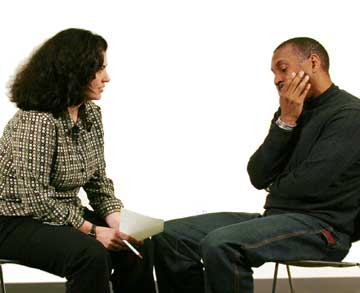
Let me introduce our first counselor, Sylvia, and her client, David.
Introduction
In this training, we will watch and discuss sections of several counseling sessions. Our imaginary sites use rapid HIV testing, which means that a lab result is available the same day, often in 20 to 40 minutes. You’ll learn more about rapid testing in later modules and in the live training.
Your site might use conventional testing. In conventional testing, the sample collected from the client is sent to a lab and the client returns for results a week or two later. Your site supervisor will explain how to adapt your counseling to the two-session process.
Let me introduce our first counselor, Sylvia, and her client, David.
Module 2: Informed Consent, Screen 3 of 15
 The Client Assessment Questionnaire
While David waits to talk to Sylvia, he fills out a short form: the Client Assessment Questionnaire, often called the CAQ. The CAQ helps Sylvia assess David’s level of risk. At many sites, clients who are at low risk of contracting HIV don’t receive counseling services. They are tested and receive a pamphlet or watch a video while they await the results.
 At some sites, particularly in big cities, the preliminary screening is done on a PDA, a handheld computer, and the counselor does not see the client's responses.
Every site is different, so ask your supervisor what happens at your site.
Ask yourself: What is the purpose of the CAQ or other preliminary screening tool?
If you’re not sure, reread the last few screens.
The Client Assessment QuestionnaireWhile David waits to talk to Sylvia, he fills out a short form: the Client Assessment Questionnaire, often called the CAQ. The CAQ helps Sylvia assess David’s level of risk. At many sites, clients who are at low risk of contracting HIV don’t receive counseling services. They are tested and receive a pamphlet or watch a video while they await the results.
At some sites, particularly in big cities, the preliminary screening is done on a PDA, a handheld computer, and the counselor does not see the client's responses.Every site is different, so ask your supervisor what happens at your site.
Ask yourself: What is the purpose of the CAQ or other preliminary screening tool?
If you’re not sure, reread the last few screens.
Module 2: Informed Consent, Screen 4 of 15
Informed Consent
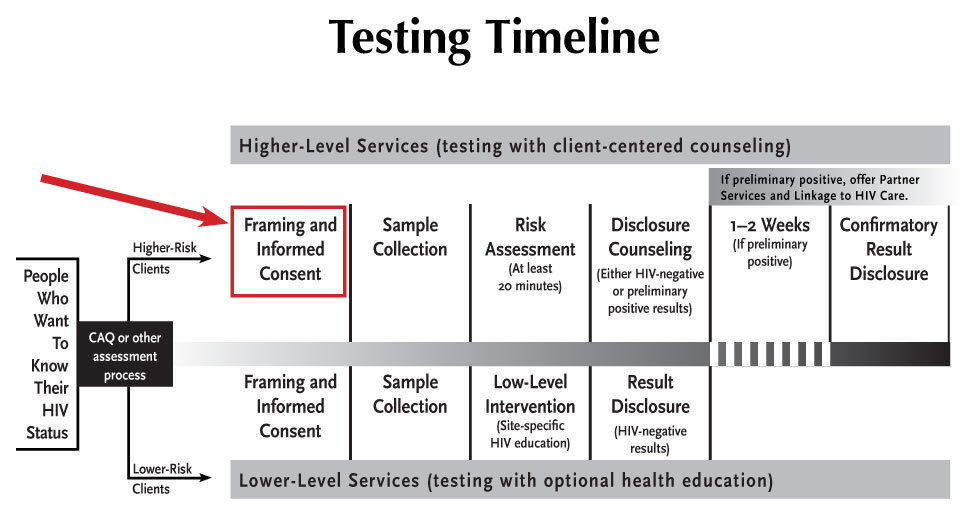
The first few minutes of the counseling session might be the most important. This is your chance to make sure that your client feels comfortable and respected. Basically, the goals for the first few minutes are:
Informed consent means that the client understands what is going to happen and agrees to the procedure.
Let’s see how Sylvia goes about it.
Informed Consent
The first few minutes of the counseling session might be the most important. This is your chance to make sure that your client feels comfortable and respected. Basically, the goals for the first few minutes are:
 Establish rapport
- Find out what brought the client in
- Explain the counseling and testing process
- Ask for questions
- Get informed consent from the client
Informed consent means that the client understands what is going to happen and agrees to the procedure.
Let’s see how Sylvia goes about it.
Module 2: Informed Consent, Screen 5 of 15
Sylvia Starts the Test Counseling Session
 Sylvia: Hello. My name is Sylvia. I’ll be your test counselor today.
David: Hi.
Sylvia: I want to quickly check in with you and ask what brought you to our site today.
David: I came to get an HIV test. I haven’t been tested in a while and thought it would be a good idea.
Sylvia: Welcome. We can definitely help you out with that today. You mentioned that you haven’t tested in a while. Is that right?
David: It was about two years ago. I went to a clinic near my old apartment. They did that quick test with the oral swab.
Sylvia: And what were the results of that test?
David: It was negative.
Sylvia Starts the Test Counseling Session
Sylvia: Hello. My name is Sylvia. I’ll be your test counselor today.David: Hi.
Sylvia: I want to quickly check in with you and ask what brought you to our site today.
David: I came to get an HIV test. I haven’t been tested in a while and thought it would be a good idea.
Sylvia: Welcome. We can definitely help you out with that today. You mentioned that you haven’t tested in a while. Is that right?
David: It was about two years ago. I went to a clinic near my old apartment. They did that quick test with the oral swab.
Sylvia: And what were the results of that test?
David: It was negative.
Module 2: Informed Consent, Screen 6 of 15
Sylvia Reviews the Rapid Test
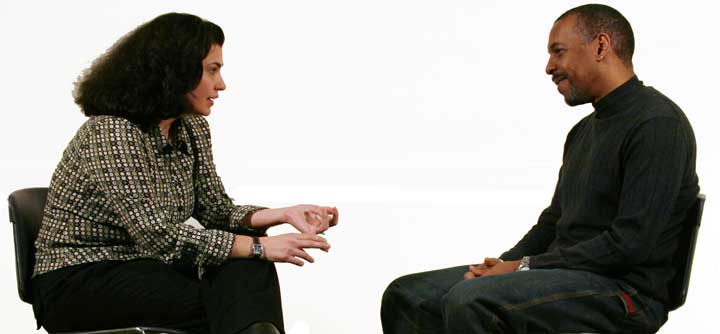 Sylvia: OK, I would like to take a minute to talk about what we offer at our site. Is that all right?
David: Sure.
Sylvia: Your last test was a rapid test, which is the kind of HIV test we offer here. What do you remember about that test?
David: I remember that I got my test results that day, which was what I wanted.
Sylvia: You’re right. The test takes 20 to 40 minutes to develop. The whole process takes about an hour. Do you have enough time for that today?
David: Yeah, no problem.
Sylvia: Great. While the test is developing, we’ll be able to talk about some of the concerns you might have about HIV. Before you leave today we will have your result. Does that sound OK?
David: Yup.
Sylvia Reviews the Rapid Test
Sylvia: OK, I would like to take a minute to talk about what we offer at our site. Is that all right?David: Sure.
Sylvia: Your last test was a rapid test, which is the kind of HIV test we offer here. What do you remember about that test?
David: I remember that I got my test results that day, which was what I wanted.
Sylvia: You’re right. The test takes 20 to 40 minutes to develop. The whole process takes about an hour. Do you have enough time for that today?
David: Yeah, no problem.
Sylvia: Great. While the test is developing, we’ll be able to talk about some of the concerns you might have about HIV. Before you leave today we will have your result. Does that sound OK?
David: Yup.
Module 2: Informed Consent, Screen 7 of 15
A Preliminary Positive Result Needs Confirmation
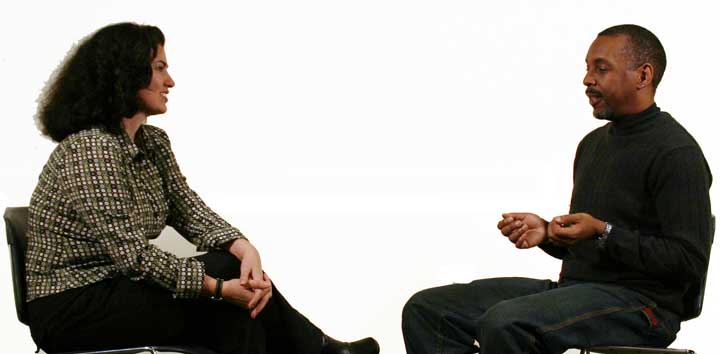 Sylvia: There are a couple of options for how we collect the test sample. You can do an oral swab, or you can go with the finger stick, where we take a small drop of blood from your finger. Do you have a preference for one over the other?
David: I want to do the same one I did last time. I’ll go with the oral one.
Sylvia: OK. The test has two possible results. The first is a negative test result. That means that there are no HIV antibodies detected in the sample.
The other test result is preliminary positive. This means that HIV antibodies were very likely detected and, very likely, the person is infected with HIV. When someone tests preliminary positive, we need a second sample to send to the lab to confirm it as a positive result. Would that be OK with you?
David: I thought this test was really accurate. Why does someone need to give a second sample if it’s so reliable?
Sylvia: Great question. This is a screening test. Although it is highly accurate, the standard of care for all types of screening tests in the United States is to confirm them with a second sample. No test is 100 percent, and we want to be certain. Does that make sense?
David: Yeah, sure.
A Preliminary Positive Result Needs Confirmation
Sylvia: There are a couple of options for how we collect the test sample. You can do an oral swab, or you can go with the finger stick, where we take a small drop of blood from your finger. Do you have a preference for one over the other?David: I want to do the same one I did last time. I’ll go with the oral one.
Sylvia: OK. The test has two possible results. The first is a negative test result. That means that there are no HIV antibodies detected in the sample.
The other test result is preliminary positive. This means that HIV antibodies were very likely detected and, very likely, the person is infected with HIV. When someone tests preliminary positive, we need a second sample to send to the lab to confirm it as a positive result. Would that be OK with you?
David: I thought this test was really accurate. Why does someone need to give a second sample if it’s so reliable?
Sylvia: Great question. This is a screening test. Although it is highly accurate, the standard of care for all types of screening tests in the United States is to confirm them with a second sample. No test is 100 percent, and we want to be certain. Does that make sense?
David: Yeah, sure.
Module 2: Informed Consent, Screen 8 of 15
Anonymous vs. Confidential Testing
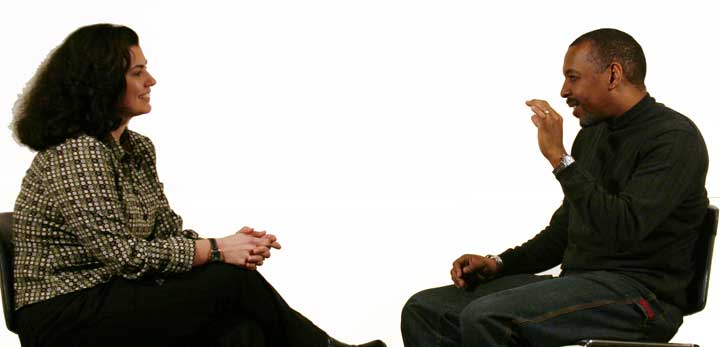 Sylvia: When you tested last, do you remember if you tested anonymously or confidentially?
David: I don’t remember. I’m not sure what the difference is.
Sylvia: At our site, a client can test either way.
In an anonymous test, we don’t collect any identifying information. We use a code instead of your name. No one except you can connect your test result with who you are.
In a confidential test, we ask for your name, address, and other contact information. If you choose the confidential test, we can provide a written result. Some people want that. We can’t do that with the anonymous test. Also, if a confidential test is HIV-positive, we forward the result to the health department along with the person’s name. The health department’s database is very secure and used only to keep track of HIV statistics.
David: Why does the health department need my name?
Sylvia: Let’s imagine that someone tested positive at a hospital last year and then came here tomorrow and tested positive again. Without a name, those two results look like two different people. Reporting positive results by name is the simplest way to know how many people actually have HIV so we can direct funding and programs where they are needed the most.
David: That makes sense, I guess. I have a new boyfriend and I’d like to show him my results, so I think I’ll go with confidential.
Anonymous vs. Confidential Testing
Sylvia: When you tested last, do you remember if you tested anonymously or confidentially?David: I don’t remember. I’m not sure what the difference is.
Sylvia: At our site, a client can test either way.
In an anonymous test, we don’t collect any identifying information. We use a code instead of your name. No one except you can connect your test result with who you are.
In a confidential test, we ask for your name, address, and other contact information. If you choose the confidential test, we can provide a written result. Some people want that. We can’t do that with the anonymous test. Also, if a confidential test is HIV-positive, we forward the result to the health department along with the person’s name. The health department’s database is very secure and used only to keep track of HIV statistics.
David: Why does the health department need my name?
Sylvia: Let’s imagine that someone tested positive at a hospital last year and then came here tomorrow and tested positive again. Without a name, those two results look like two different people. Reporting positive results by name is the simplest way to know how many people actually have HIV so we can direct funding and programs where they are needed the most.
David: That makes sense, I guess. I have a new boyfriend and I’d like to show him my results, so I think I’ll go with confidential.
Module 2: Informed Consent, Screen 9 of 15
David Gives Informed Consent
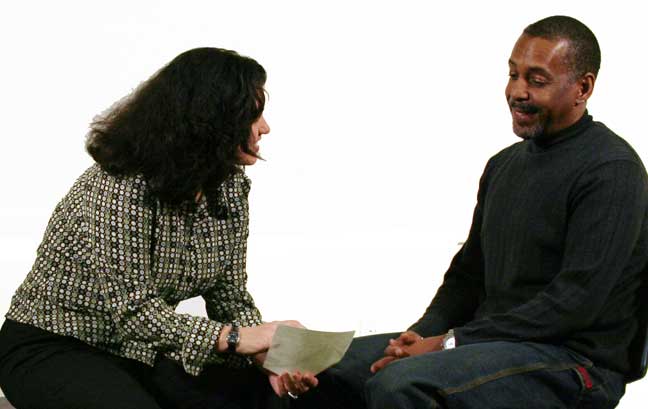 Sylvia: Let me see: I’m hearing that you want the rapid test, you would like to give an oral sample, and you want to test confidentially, not anonymously. Is that right?
David: Yup. That’s it.
Sylvia: OK. Since you chose the confidential test, I’m going to ask you to fill in the information here and sign the consent form.
When you sign the consent form, you give us permission to do the rapid test and agree that you understand three things I explained:
David: I’m good.
Ask yourself: What is the difference between anonymous and confidential testing? If you’re not sure, reread the last few screens.
David Gives Informed Consent
Sylvia: Let me see: I’m hearing that you want the rapid test, you would like to give an oral sample, and you want to test confidentially, not anonymously. Is that right?David: Yup. That’s it.
Sylvia: OK. Since you chose the confidential test, I’m going to ask you to fill in the information here and sign the consent form.
When you sign the consent form, you give us permission to do the rapid test and agree that you understand three things I explained:
- The difference between anonymous and confidential testing.
- The accuracy of the results: They are highly accurate but not 100 percent.
- The process today: You will get your results, and if the test comes back preliminary positive, you agree to give another sample that we can send to the lab for confirmatory testing.
David: I’m good.
Ask yourself: What is the difference between anonymous and confidential testing? If you’re not sure, reread the last few screens.
Module 2: Informed Consent, Screen 10 of 16
Sylvia Introduces the Counseling Information Form
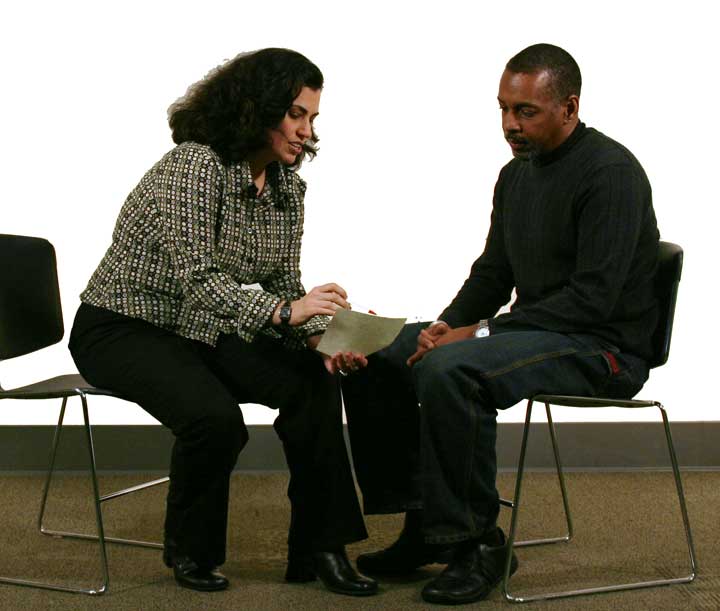 Sylvia: OK, I just have two more things to mention. I’m not sure if you remember this Counseling Information Form from the last time you tested. We use it to identify trends in the epidemic.
 David: I remember that form. The guy asked me a bunch of questions from it.
Sylvia: I will just set it down next to me and maybe refer to it close to the end of our session. Also, here’s a brochure from the people who make the rapid test. You don’t have to look at it now, but I want to make sure you have it. Do you have any questions before we head to the lab?
David: No, I’m ready.
 Module 2: Informed Consent, Screen 11 of 15
Let’s Debrief
Sylvia tried to create an atmosphere in which David would feel comfortable sharing information about his life and thinking about changes he might want to make.
What specific things did you notice Sylvia doing to make David feel welcome, listened to, and respected?
Module 2: Informed Consent, Screen 12 of 15
Building Rapport

How many of these elements of building rapport did you notice?
Sylvia:
Building Rapport
How many of these elements of building rapport did you notice?
Sylvia:
- Introduced herself and welcomed David to the test counseling session.
- Explained exactly what was going to happen.
- Asked David about any previous experience testing.
- Asked David for previous knowledge.
- Asked David for permission before sharing new information
and avoided lecturing. - Checked for understanding and questions.
- Was calm, friendly, and professional.
Module 2: Informed Consent, Screen 13 of 15
The Rapid Test

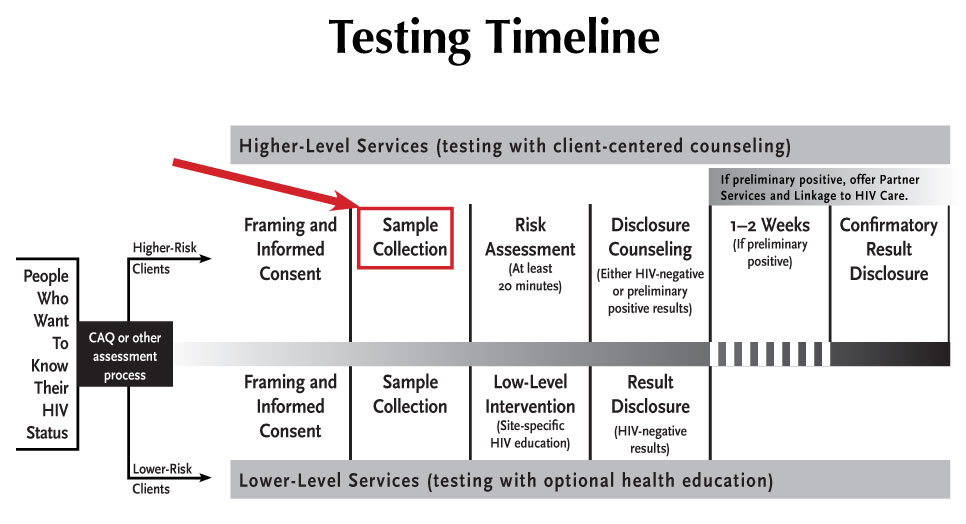
David had already done a rapid test, so he didn’t have many questions about it. But you probably want to know more. Here are some basic facts about the OraQuick ADVANCE Rapid HIV-1/HIV-2 Antibody Test:
The Rapid Test
David had already done a rapid test, so he didn’t have many questions about it. But you probably want to know more. Here are some basic facts about the OraQuick ADVANCE Rapid HIV-1/HIV-2 Antibody Test:
- The test is performed on either an oral sample collected by swabbing along the gums or a blood sample, usually from a finger stick.
- The rapid test takes between 20 and 40 minutes to develop a result.
- The test looks for the antibodies that the body creates to fight HIV infection.
Module 2: Informed Consent, Screen 14 of 15
Rapid Test Results
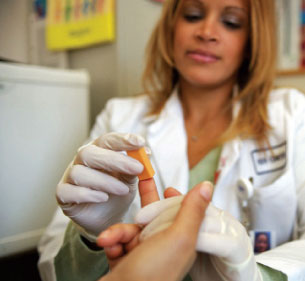 There are three possible rapid test results:
A preliminary positive test result means that the test very likely detected HIV antibodies. The individual is very likely infected with HIV. Preliminary positive results must be confirmed. At most sites, this means the client submits a second sample and returns after seven to 14 days to receive the results of the confirmatory test. If the confirmatory test is also positive, it is considered a positive result and the client is HIV-positive.
A negative test result means that no antibodies to HIV were detected in the sample. The person is either not infected with HIV, or the person is infected but has not yet produced enough HIV antibodies to show up on the test. The process to produce antibodies takes anywhere from two weeks to six months, and many HIV-positive people have detectable antibodies by the end of three months. This time lag is known as the “window period.” We will discuss it in Module 3.
An invalid test result is very rare. If it occurs, the test must be redone with a new sample.
At the face-to-face Basic Skills Training, you will learn the rapid test procedure, be evaluated on your ability to conduct the test, and, if you pass the evaluation, be certified to administer, read, and record the test.
Read this PDF to learn more about the OraQuick ADVANCE Rapid HIV-1/HIV-2 Antibody Test.
Ask yourself: What are the three possible results from a rapid antibody test? If you’re not sure, reread this screen.
Rapid Test Results
There are three possible rapid test results:A preliminary positive test result means that the test very likely detected HIV antibodies. The individual is very likely infected with HIV. Preliminary positive results must be confirmed. At most sites, this means the client submits a second sample and returns after seven to 14 days to receive the results of the confirmatory test. If the confirmatory test is also positive, it is considered a positive result and the client is HIV-positive.
A negative test result means that no antibodies to HIV were detected in the sample. The person is either not infected with HIV, or the person is infected but has not yet produced enough HIV antibodies to show up on the test. The process to produce antibodies takes anywhere from two weeks to six months, and many HIV-positive people have detectable antibodies by the end of three months. This time lag is known as the “window period.” We will discuss it in Module 3.
An invalid test result is very rare. If it occurs, the test must be redone with a new sample.
At the face-to-face Basic Skills Training, you will learn the rapid test procedure, be evaluated on your ability to conduct the test, and, if you pass the evaluation, be certified to administer, read, and record the test.
Read this PDF to learn more about the OraQuick ADVANCE Rapid HIV-1/HIV-2 Antibody Test.
Ask yourself: What are the three possible results from a rapid antibody test? If you’re not sure, reread this screen.
Module 2: Informed Consent, Screen 15 of 15
Let’s Review Informed Consent

Just to review, here’s what you need to do with your client before you collect the sample. We call this the Informed Consent part of the session:
That’s it! You have completed the first part of the HIV test session. In Module 3, we’ll talk about what happens when the client returns from the lab.
For more information about Informed Consent
Let’s Review Informed Consent
Just to review, here’s what you need to do with your client before you collect the sample. We call this the Informed Consent part of the session:
- Establish rapport.
- Explain what will happen during the session and when the client will receive test results. For rapid tests, make sure the client knows that a preliminary positive result requires a confirmatory test.
- Explain any choices the client has: rapid vs. conventional, anonymous vs. confidential, oral sample vs. blood sample. Where there is only one of these options, explain the option.
- Check for questions and concerns.
- Have client give informed consent to the test (a spoken consent for anonymous testing, a signed consent for confidential).
That’s it! You have completed the first part of the HIV test session. In Module 3, we’ll talk about what happens when the client returns from the lab.
For more information about Informed Consent