Module 3: Introduction to Risk Assessment
| Site: | UCSF Collaborative Learning Environment |
| Course: | Advanced Counselor Skills Pre-Training Course |
| Book: | Module 3: Introduction to Risk Assessment |
| Printed by: | Guest user |
| Date: | Saturday, July 18, 2026, 5:32 AM |
Description
Module 3: Introduction to Risk Assessment
Table of contents
- 1. Module 3 Title Screen
- 2. What Is Risk Assessment?
- 3. Goals of the Risk Assessment
- 4. The General Principles of HIV Test Counseling
- 5. Counselors Define Client-Centered Counselin
- 6. Client-Centered Counseling Ideas
- 7. Context
- 8. Individualized Session
- 9. Information Alone Does Not Change Behavior
- 10. Neutral Stance
- 11. Limited Role
- 12. Conclusion

Module 3:
Introduction to Risk Assessment

What Is Risk Assessment?
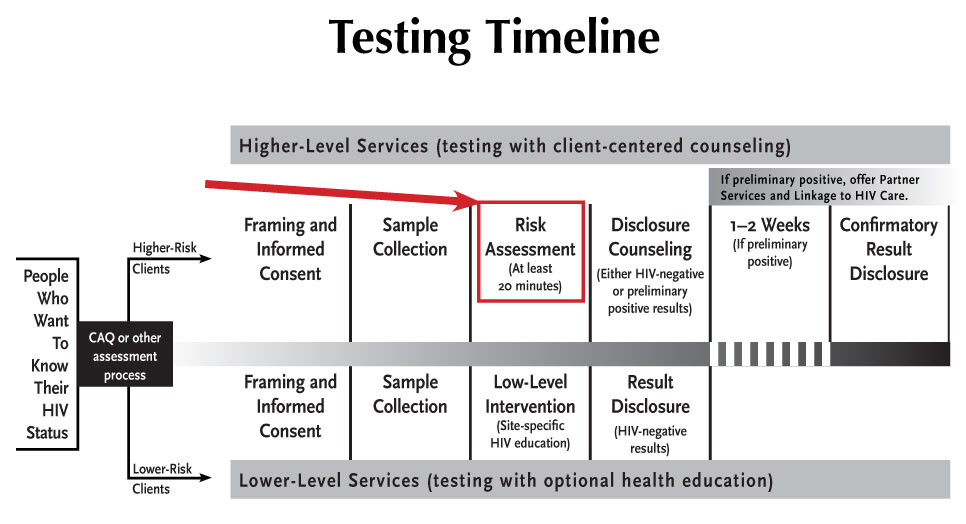
When the client returns from the lab, we begin the main portion of the counseling session. It is called the Risk Assessment because that is when we gather information to help the client begin to identify activities in their lives that could result in HIV transmission. At most sites, it's also the time when we collect data for the Client Information Form.
The term “risk assessment,” however, doesn’t tell the whole story. It sounds like a checklist, and the process works best, really, if we have a conversation. Our job is to offer a safe place for our clients to consider the issues in their lives that put them at risk for HIV transmission.
If you can get into a good conversation with your clients, they will feel comfortable sharing and thinking aloud about possible changes in their lives, and you will get most of the information you need without even looking at the form.
Goals of the Risk Assessment
There are many things we need to accomplish in the risk assessment. At the same time, we want to stay focused on the client’s concerns.
Does this sound like a tall order? How are we going to have anything like a conversation that accomplishes all this?
The General Principles of HIV Test Counseling
It’s easier than you might think. There are six principles that lay the foundation for having a productive, supportive conversation with clients:
 Client-Centered Counseling
- Context
- Support All Positive Changes
- Individualized Session
- Information Alone Does Not Change Behavior
- Neutral Stance
- Limited Role
Let’s take a look at these principles one by one.
Counselors Define Client-Centered Counseling
We asked some participants in a training like this one for definitions of client-centered counseling. Here is what they said:
"Clients are more important than paperwork."
"Feelings come first."
"Listen more talk less."
"Focus on the client's needs, not the counselor's needs."

Client-Centered Counseling Ideas
All of those ideas are part of client-centered counseling. You can think of client-centered counseling in terms of two big ideas:
- Express unconditional positive regard for the client: Demonstrate your respect for the client’s feelings and concerns. You might have very different ideas and feelings yourself, but you will be most effective if clients feel you are on their side, trying to see the situation from their perspective.
- Frame the session in the clients’ terms: Work within the “frame” of your clients’ concerns and experiences, not your own. For example, start with why they came in for testing, not with the first question on the CIF.
Ask yourself: What is client-centered counseling?
If you’re not sure, reread the last few screens.
Context
 Risk factors do not happen independently; they are influenced by the context of our lives. Context sets the scene for the choices we make, including those that can affect our risk for HIV. Our life context might include such factors as our sexual partners, families, jobs, and communities, as well as the impact of racism, sexism, homophobia, poverty, and other forms of oppression.
 To explore context, use open-ended questions, and listen carefully to what clients tell you about their lives and how the risk for HIV transmission fits into this larger picture.
Individualized Session
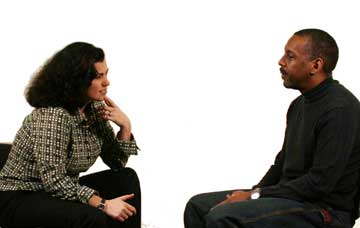
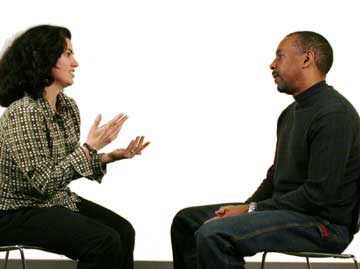 Because client-centered counseling occurs within the framework of the client’s concerns, each session will be different. Even though there are many things you need to cover by the end of the session, how that happens can vary widely. For example, some clients test regularly and know all about the window period, while others have never heard the term. Some clients are used to talking about sex with a counselor, while for others, this is a huge challenge.
For new counselors especially, it is tempting to use the CIF to structure the session. The most effective counseling sessions, however, are based in an individualized conversation—not a preset checklist—that follows the client’s lead and explores client concerns.
 Information Alone Does Not Change Behavior
If a counselor tells a client who smokes, “Smoking causes cancer,” that person is probably not going to stop smoking as a result. The information might change the client’s feelings but, alone, it will not change the client’s behavior. The client may feel more inclined to avoid the counselor than to avoid cigarettes.
Similarly, telling a client, “Unless you use a condom, you are putting yourself at risk for HIV,” will probably not be enough to get that client to decide to practice safer sex.
Remember context: We all have reasons for what we do, including the things that put us at risk for HIV or other health hazards. We and our clients are most likely to change when we feel supported in thinking about the changes we want to make ourselves, not when we feel lectured or judged by others.
 Neutral Stance
Remember when we talked about unconditional positive regard as one of the key ideas of client-centered counseling? Neutral stance is related to unconditional positive regard.
Neutral stance means being supportive and nonjudgmental—showing respect for the client’s perspective without agreeing or disagreeing.
It doesn’t help to argue or lecture about a client’s behavior or ideas, even if they seem misguided or dangerous. But we also don’t want to cheerlead for a specific change they are considering. Neutral stance means leaving space for clients to work out how they feel and what they want to do for themselves.
Remember, the client—not the counselor—ultimately decides on which changes to make and how to make them. As much as it may be tempting to corral a client toward an understanding or decision, behavior change simply does not work that way. A neutral stance says that you trust the counseling session to offer the client the information and support to make the best decisions.
Limited Role

Sometimes HIV risk is only one of many serious problems in a client’s life. At some sites, many clients face overwhelming survival issues. As caring people, it’s hard for counselors not to want to help.
HIV test counselors, however, have a limited role: Our job is to assess risk for HIV transmission and guide clients toward changes that will lower that risk.
As you will see in a later module, giving referrals for additional services is part of the HIV test counseling session. Your site supervisor will help you become familiar with the referrals for other services in your area.

Conclusion
In this module, we defined the Risk Assessment portion of the counseling session, and discussed the Six General Principles of HIV Test Counseling.
In the next module, we’ll watch a Risk Assessment and see those principles in action.
Ask yourself: What are the six General Principles of HIV test counseling?
If you’re not sure, reread the last few screens.