Module 5: HIV Transmission and Prevention
| Site: | UCSF Collaborative Learning Environment |
| Course: | Advanced Counselor Skills Pre-Training Course |
| Book: | Module 5: HIV Transmission and Prevention |
| Printed by: | Guest user |
| Date: | Friday, July 17, 2026, 12:13 PM |
Description
Module 5: HIV Transmission and Prevention
Table of contents
- 1. HIV Transmission and Prevention
- 2. The Five Body Fluids that Can Transmit HIV
- 3. HIV Transmission and Prevention
- 4. Continuum of Risk
- 5. What Are Bill’s Risks for Transmitting HIV?
- 6. Risk Reduction Options for Bill
- 7. What Are Linda’s Risks for HIV Transmission?
- 8. Risk Reduction Options for Linda
- 9. Comfort Asking About Sex
- 10. Don’t Make Assumptions
- 11. Basic Ways to Prevent HIV During Sex
- 12. We Return to Paolo and Greg
- 13. Paolo Suggests a Referral
- 14. Paolo Asks Greg About Realistic Options
- 15. Paolo Helps Greg Explore His Feelings
- 16. Paolo Offers a Couple of Risk Reduction Options
- 17. Paolo Summarizes Greg’s Options
- 18. Conclusion

Module 5:
HIV Transmission and Prevention
Module 5: HIV Transmission and Prevention, Screen 2 of 17
 The Five Body Fluids that Can Transmit HIV
This module explores the basics of how HIV passes from person to person. We’ll focus on sexual transmission and prevention. In Module 6 we’ll look more at drugs and injection drug use.
Let’s start with the five body fluids that can transmit HIV:
Other body fluids (tears, saliva, sweat, sputum, nasal secretions, urine, and feces) do not transmit HIV. Sharing food or drink, hugging and kissing, sharing a classroom or work environment—the U.S. National Institutes of Health and the U.S. Centers for Disease Control and Prevention have found that none of these are ways that people contract the virus.
The Five Body Fluids that Can Transmit HIVThis module explores the basics of how HIV passes from person to person. We’ll focus on sexual transmission and prevention. In Module 6 we’ll look more at drugs and injection drug use.
Let’s start with the five body fluids that can transmit HIV:
- Blood
- Semen
- Precum (pre-ejaculate)
- Vaginal Fluid
- Breast Milk (for infants)
Other body fluids (tears, saliva, sweat, sputum, nasal secretions, urine, and feces) do not transmit HIV. Sharing food or drink, hugging and kissing, sharing a classroom or work environment—the U.S. National Institutes of Health and the U.S. Centers for Disease Control and Prevention have found that none of these are ways that people contract the virus.
Module 5: HIV Transmission and Prevention, Screen 3 of 17
HIV Transmission and Prevention

For HIV to pass from one person to another, one of the five fluids containing HIV has to enter the bloodstream of an uninfected person. HIV can’t survive long outside the human body, and human skin is excellent at protecting against infection.
HIV can only get into the body when the skin is torn or compromised in some way, or when HIV passes through mucous membranes (for example, the wet, soft skin in the rectum and vagina).
There are four ways, called modes of transmission, that HIV can enter the body:
Ask yourself: What are the five fluids that can transmit HIV? If you’re not sure, reread the last few screens.
HIV Transmission and Prevention
For HIV to pass from one person to another, one of the five fluids containing HIV has to enter the bloodstream of an uninfected person. HIV can’t survive long outside the human body, and human skin is excellent at protecting against infection.
HIV can only get into the body when the skin is torn or compromised in some way, or when HIV passes through mucous membranes (for example, the wet, soft skin in the rectum and vagina).
There are four ways, called modes of transmission, that HIV can enter the body:
- During unprotected anal and vaginal intercourse sex, and possibly, under very specific conditions, oral sex
- While sharing injection equipment, most often needles
- During pregnancy, birth, or breastfeeding, from mother to fetus or newborn
- Through contact with blood during health care or other occupational exposure
Ask yourself: What are the five fluids that can transmit HIV? If you’re not sure, reread the last few screens.
Module 5: HIV Transmission and Prevention, Screen 4 of 17
Continuum of Risk
As you can see in this illustration, different activities pose different risks for HIV. If you look at the continuum, anal or vaginal intercourse with someone who has the virus risks infection much more than, say, oral sex.
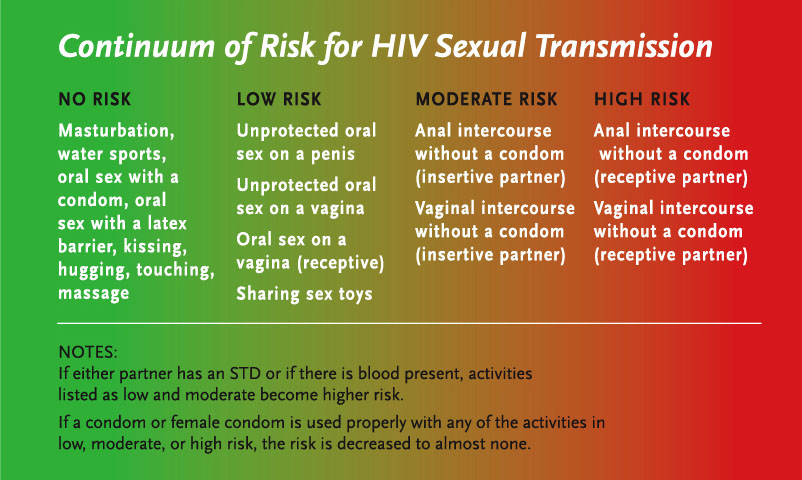
When you’re counseling, you might use the concept of a continuum of risk to help clients think of small, incremental steps to reduce the chance of infection. For example, if a client is not going to use a condom, substituting oral sex for anal intercourse is a step that dramatically reduces the client’s chance of contracting or transmitting the virus.
Let’s look at two specific examples of options for reducing the risk of HIV infection.
Ask yourself: Can you name three activities that are high risk for HIV transmission?
If you’re not sure, reread the last few screens.
Continuum of Risk
As you can see in this illustration, different activities pose different risks for HIV. If you look at the continuum, anal or vaginal intercourse with someone who has the virus risks infection much more than, say, oral sex.
When you’re counseling, you might use the concept of a continuum of risk to help clients think of small, incremental steps to reduce the chance of infection. For example, if a client is not going to use a condom, substituting oral sex for anal intercourse is a step that dramatically reduces the client’s chance of contracting or transmitting the virus.
Let’s look at two specific examples of options for reducing the risk of HIV infection.
Ask yourself: Can you name three activities that are high risk for HIV transmission?
If you’re not sure, reread the last few screens.
Module 5: HIV Transmission and Prevention, 5 of 17
What Are Bill’s Risks for Transmitting HIV?
What Are Bill’s Risks for Transmitting HIV?
This is Bill. Bill is in his 30s and identifies as a gay man. He is testing today because he has been having sex with men he meets online. He signs on in the afternoons and makes dates to meet some of these men at the local bathhouse. Here’s how Bill explains his situation to the counselor:
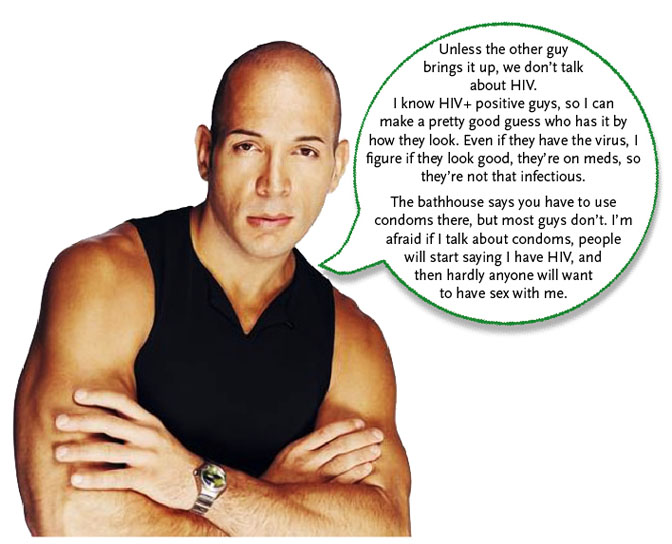
What are some risk reduction options for Bill?
Module 5: HIV Transmission and Prevention, Screen 6 of 17
Risk Reduction Options for Bill
It’s not going to work to tell Bill how dangerous unprotected sex is. Instead, the counselor could ask Bill if he is interested in talking about options to reduce the chances of transmitting HIV, and if he has any ideas for options that might work for him. Here is some framework for thinking about options:
Bill is not necessarily opposed to using condoms. Since he arranges his encounters online, one thing he could do is tell guys he’s chatting with online which sexual activities he likes—but only with a condom—and which activities won’t require condoms. Those men who are not interested in using condoms at all will probably just pass on meeting up with him.
Another thing Bill could do is try to “serosort”: only have sex with men of the same HIV status. He could post his HIV status on the forum and say he is only interested in having sex with other negative men. Or, he could choose to only have anal sex with men who state they are negative, but have oral sex and/or mutual masturbation with men of any status.
Bill could also reduce his risk of HIV transmission by increasing the amount of lube he uses with his partners. Or he could reduce the amount of anal sex, both insertive and receptive, and increase oral and other kinds of sex.
Risk Reduction Options for Bill
It’s not going to work to tell Bill how dangerous unprotected sex is. Instead, the counselor could ask Bill if he is interested in talking about options to reduce the chances of transmitting HIV, and if he has any ideas for options that might work for him. Here is some framework for thinking about options:
Bill is not necessarily opposed to using condoms. Since he arranges his encounters online, one thing he could do is tell guys he’s chatting with online which sexual activities he likes—but only with a condom—and which activities won’t require condoms. Those men who are not interested in using condoms at all will probably just pass on meeting up with him.
Another thing Bill could do is try to “serosort”: only have sex with men of the same HIV status. He could post his HIV status on the forum and say he is only interested in having sex with other negative men. Or, he could choose to only have anal sex with men who state they are negative, but have oral sex and/or mutual masturbation with men of any status.
Bill could also reduce his risk of HIV transmission by increasing the amount of lube he uses with his partners. Or he could reduce the amount of anal sex, both insertive and receptive, and increase oral and other kinds of sex.
Module 5: HIV Transmission and Prevention, Screen 7 of 17
What Are Linda’s Risks for HIV Transmission?
Let’s look at one more example. Linda is a woman in her mid-40s. She has been married for 15 years. Her husband does not know that she is testing. They both stopped using crystal about three years ago. Let’s see what Linda has to say:
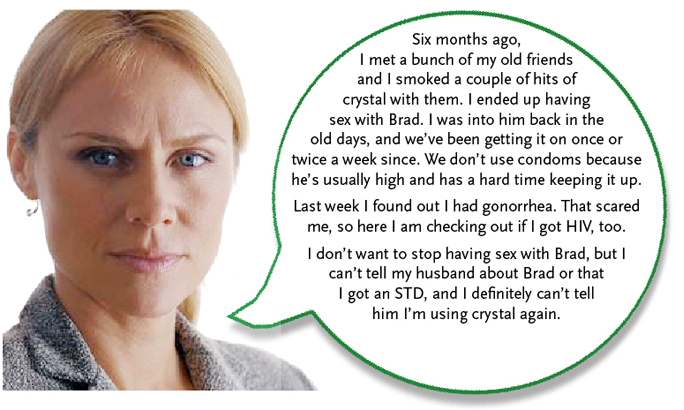
What can Linda do to reduce the risk of transmission of HIV?
What Are Linda’s Risks for HIV Transmission?
Let’s look at one more example. Linda is a woman in her mid-40s. She has been married for 15 years. Her husband does not know that she is testing. They both stopped using crystal about three years ago. Let’s see what Linda has to say:
What can Linda do to reduce the risk of transmission of HIV?
Module 5: HIV Transmission and Prevention, Screen 8 of 17
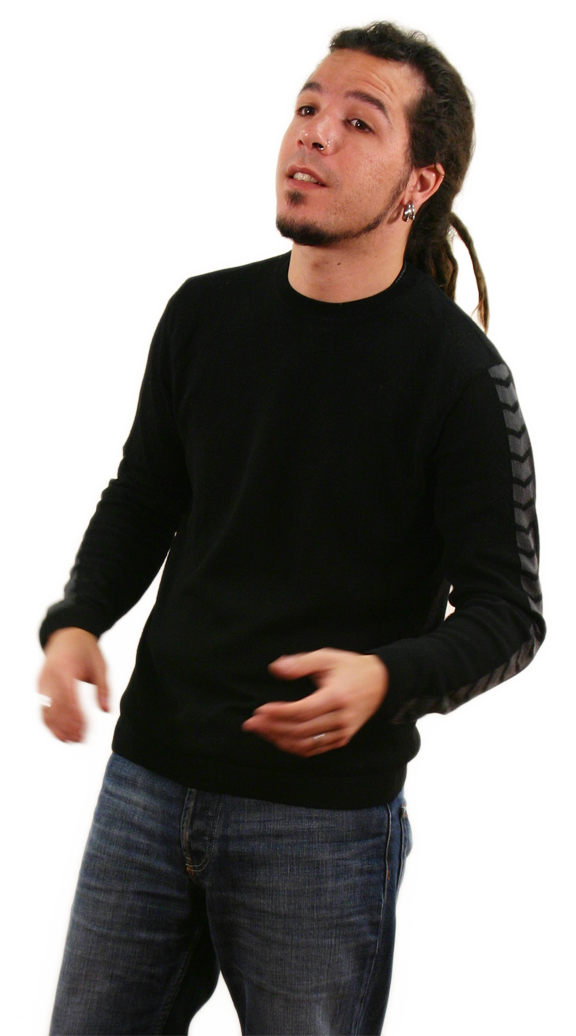
Risk Reduction Options for Linda
Linda does not want to tell her husband about her drug use, her STD, or her sexual relationship with Brad, so she won’t tell her husband to wear a condom. Brad doesn’t want to use a condom when he has sex with Linda because he can’t maintain an erection. It seems clear that condoms are not an option right now. What options to reduce risk might work for Linda?
Once she and Brad no longer have gonorrhea, Linda could increase the amount of oral sex and decrease the amount of intercourse in both relationships. (Oral sex decreases the risk of HIV transmission, but gonorrhea can be transmitted orally. If another STD is present, the risk for HIV transmission is also higher.)
With Brad, she could suggest starting with intercourse and finishing with oral sex or a hand job. While precum (pre-ejaculate) can transmit HIV, it is less risky than cum (ejaculate). She could also try a Reality (female) condom with Brad. She can wear this condom when they have intercourse to protect herself from HIV and other STDs.
Linda could also use lots of lube with both partners. A water-based lubricant will decrease the amount of friction during sex and reduce the chances of HIV transmission.
Ask yourself: Other than using condoms, what are a few ways people can reduce their risk for HIV? If you’re not sure, reread the last few screens.
Risk Reduction Options for Linda
Linda does not want to tell her husband about her drug use, her STD, or her sexual relationship with Brad, so she won’t tell her husband to wear a condom. Brad doesn’t want to use a condom when he has sex with Linda because he can’t maintain an erection. It seems clear that condoms are not an option right now. What options to reduce risk might work for Linda?
Once she and Brad no longer have gonorrhea, Linda could increase the amount of oral sex and decrease the amount of intercourse in both relationships. (Oral sex decreases the risk of HIV transmission, but gonorrhea can be transmitted orally. If another STD is present, the risk for HIV transmission is also higher.)
With Brad, she could suggest starting with intercourse and finishing with oral sex or a hand job. While precum (pre-ejaculate) can transmit HIV, it is less risky than cum (ejaculate). She could also try a Reality (female) condom with Brad. She can wear this condom when they have intercourse to protect herself from HIV and other STDs.
Linda could also use lots of lube with both partners. A water-based lubricant will decrease the amount of friction during sex and reduce the chances of HIV transmission.
Ask yourself: Other than using condoms, what are a few ways people can reduce their risk for HIV? If you’re not sure, reread the last few screens.
Module 5: HIV Transmission and Prevention, Screen 9 of 17
Comfort Asking About Sex
Some of us come from families and environments in which sex is discussed openly and neutrally. But many of us—and many of our clients—come from backgrounds in which these conversations are taboo.
Silence surrounding sex often hides what people are actually doing and, consequently, it hides whether we understand their HIV risk from sex. Whether it’s our own discomfort with the topic or a client’s discomfort, silence can lead to assumptions about what people do and how they can prevent HIV while doing it.
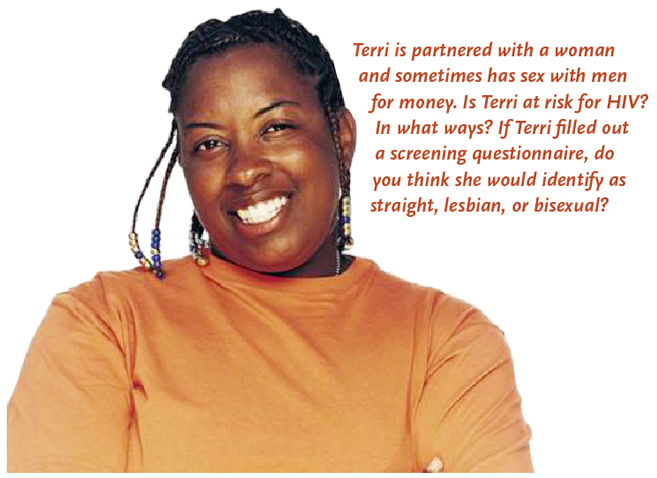
Comfort Asking About Sex
Some of us come from families and environments in which sex is discussed openly and neutrally. But many of us—and many of our clients—come from backgrounds in which these conversations are taboo.
Silence surrounding sex often hides what people are actually doing and, consequently, it hides whether we understand their HIV risk from sex. Whether it’s our own discomfort with the topic or a client’s discomfort, silence can lead to assumptions about what people do and how they can prevent HIV while doing it.
People might think Terri is bisexual. But it would be a mistake to jump to that conclusion, just as it would be a mistake to assume we already know what her HIV risk is. There are a lot of possibilities here:
- Maybe Terri identifies as a lesbian, and only has sex with men to pay her bills. She always uses condoms for oral, vaginal, and anal sex with men because she doesn’t want to bring anything home to her partner. Her partner accepts Terri’s HIV risk from sex work as minimal, so they don’t use protection with one another.
- Maybe Terri limits her sex with men to being a professional dominatrix, occasionally masturbating men but never coming in direct contact with precum or semen. She doesn’t like labels, so she doesn’t identify as lesbian, bisexual, or heterosexual. She and her partner inject heroin together, which helps her cope with her work.
- Maybe Terri identifies as bisexual. She always uses condoms for vaginal and anal sex with her male clients. Terri’s partner is HIV-positive, but they don’t use protection for oral sex and use separate sex toys for each another. Terri had a condom break recently with one of her male clients.
Module 5: HIV Transmission and Prevention, Screen 10 of 17

Don’t Make Assumptions
As you can see, we can’t assume much looking through a narrow window into someone’s sexual behavior. The main thing to remember is that we need to keep our own assumptions in check, otherwise we risk making it more difficult for clients to tell us what they’re doing.
We don’t have to know everything there is to know about sex in order to do HIV counseling. We do, however, need to know some of the basic approaches people use to prevent contracting the virus.
Don’t Make Assumptions
As you can see, we can’t assume much looking through a narrow window into someone’s sexual behavior. The main thing to remember is that we need to keep our own assumptions in check, otherwise we risk making it more difficult for clients to tell us what they’re doing.
We don’t have to know everything there is to know about sex in order to do HIV counseling. We do, however, need to know some of the basic approaches people use to prevent contracting the virus.
Module 5: HIV Transmission and Prevention, Screen 11 of 17
Basic Ways to Prevent HIV During Sex
People can prevent HIV infection during sex by not taking blood, semen, pre-ejaculate, or vaginal secretions into the mouth, vagina, or anus. Condoms nearly eliminate the risk of HIV transmission during anal and vaginal intercourse. However, not all clients you’ll see will be ready, willing, or able to use condoms or to use them 100 percent of the time.
If someone isn’t going to use a condom, here are some other options that might lessen the chance of infection during sex:
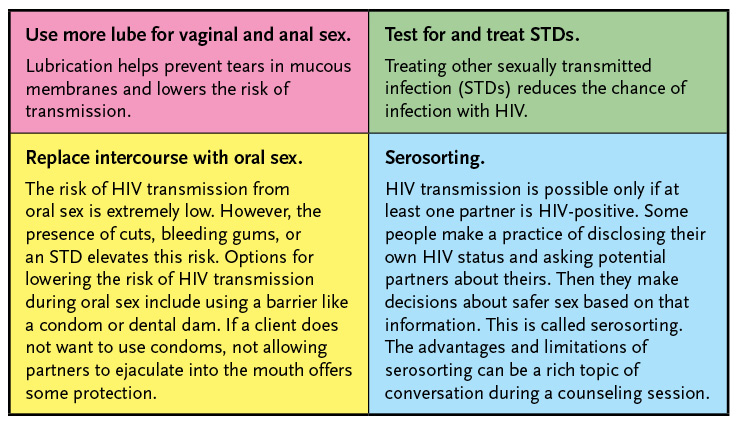
For more information about the STD-HIV connection, check out this PDF
Ask yourself: Why is it important not to make assumptions about clients’ sex lives?
If you’re not sure, reread the last few screens.
Basic Ways to Prevent HIV During Sex
People can prevent HIV infection during sex by not taking blood, semen, pre-ejaculate, or vaginal secretions into the mouth, vagina, or anus. Condoms nearly eliminate the risk of HIV transmission during anal and vaginal intercourse. However, not all clients you’ll see will be ready, willing, or able to use condoms or to use them 100 percent of the time.
If someone isn’t going to use a condom, here are some other options that might lessen the chance of infection during sex:
For more information about the STD-HIV connection, check out this PDF
Ask yourself: Why is it important not to make assumptions about clients’ sex lives?
If you’re not sure, reread the last few screens.
Module 5: HIV Transmission and Prevention, Screen 12 of 17
We Return to Paolo and Greg

Now let’s rejoin Paolo and Greg. As you may remember, Paolo had just summarized the discussion so far, and reflected back to Greg that he seemed to want to do something about his need to “prove a point” by topping without a condom.


We Return to Paolo and Greg
Now let’s rejoin Paolo and Greg. As you may remember, Paolo had just summarized the discussion so far, and reflected back to Greg that he seemed to want to do something about his need to “prove a point” by topping without a condom.
What have you thought
about doing, if anything?
about doing, if anything?
Module 5: HIV Transmission and Prevention, Screen 13 of 17
Paolo Suggests a Referral
Greg: I’ve been thinking—maybe I should talk to someone, like a therapist.

Paolo: That’s often helpful in a situation like this. Before you go, I can give you referrals to a couple of therapists.
 Greg: Thanks.
Paolo: We still have some time before the result is ready. Would you be OK with us focusing on prevention a little more specifically?
Greg: What do you mean?
Paolo: To start, there’s a question I wanted to ask you: Does drinking or other drugs play a role in whether or not you use condoms?
Greg: No, not really.
Paolo Suggests a Referral
Greg: I’ve been thinking—maybe I should talk to someone, like a therapist.
Paolo: That’s often helpful in a situation like this. Before you go, I can give you referrals to a couple of therapists.
Greg: Thanks.Paolo: We still have some time before the result is ready. Would you be OK with us focusing on prevention a little more specifically?
Greg: What do you mean?
Paolo: To start, there’s a question I wanted to ask you: Does drinking or other drugs play a role in whether or not you use condoms?
Greg: No, not really.
Module 5: HIV Transmission and Prevention, Screen 14 of 17
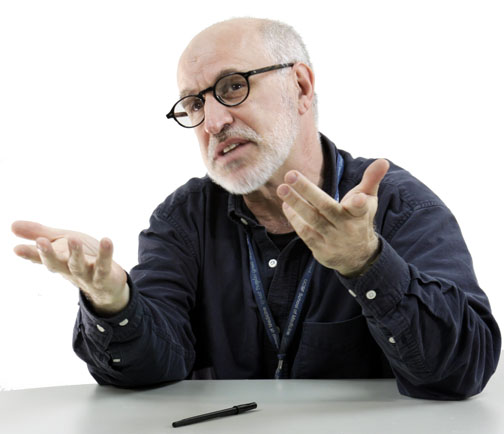
Paolo Asks Greg About Realistic Options
Paolo: OK. It’s helpful to get a picture of everything that’s happening.
I know you’re interested in talking with a therapist. In the meantime, though, if you find yourself in a situation similar to the one that happened last month, what do you think you might do?
 Greg: I guess I could try to use a condom.
Paolo: You mentioned that you use them when you bottom.
Greg: I didn’t tell you everything before. If I don’t use a condom as a top, guys just assume I’m into raw sex as a bottom, too. So, sometimes it goes both ways. I know, I know. I should just use condoms—or not have sex at all.
Paolo: Sometimes you don’t feel you can use a condom and, at the same time, you want to protect your health.
Paolo Asks Greg About Realistic Options
Paolo: OK. It’s helpful to get a picture of everything that’s happening.
I know you’re interested in talking with a therapist. In the meantime, though, if you find yourself in a situation similar to the one that happened last month, what do you think you might do?
Greg: I guess I could try to use a condom.Paolo: You mentioned that you use them when you bottom.
Greg: I didn’t tell you everything before. If I don’t use a condom as a top, guys just assume I’m into raw sex as a bottom, too. So, sometimes it goes both ways. I know, I know. I should just use condoms—or not have sex at all.
Paolo: Sometimes you don’t feel you can use a condom and, at the same time, you want to protect your health.
Module 5: HIV Transmission and Prevention, Screen 15 of 17
Paolo Helps Greg Explore His Feelings
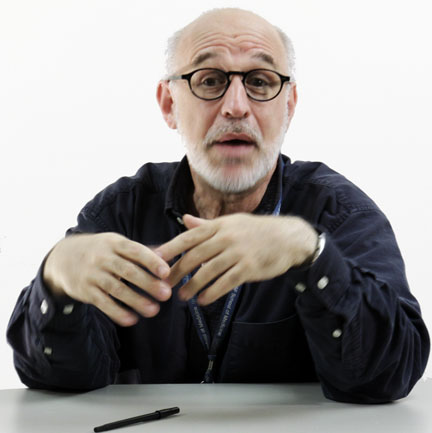 Greg: That’s true. Well, there is one thing I already do. I don’t let guys come inside me.
Paolo: That does lower the risk of HIV transmission. It’s just that you seem to be so worried about HIV. Even though that reduces the chances, I wonder if you feel it’s enough for you.
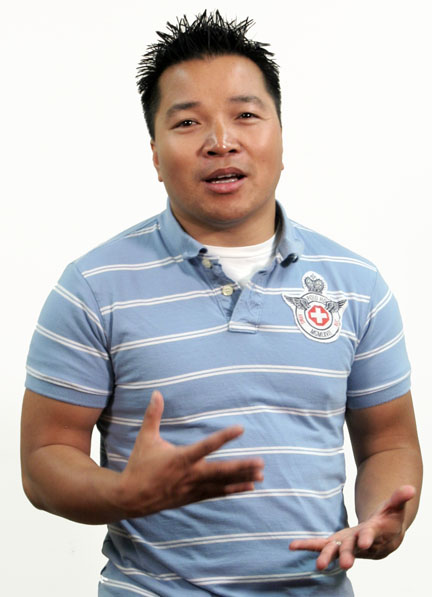 Greg: I’m not sure. Sometimes it feels too difficult to change. And, honestly, when everything goes OK, I like the feeling of raw sex. But it’s sort of a death wish, isn’t it? That’s why I’m thinking about seeing that therapist.
Paolo: You think there’s something more to this than just pleasure.
Greg: Definitely.
Paolo: I’m going to take a stab at summing up what you’re saying, because I want to make sure I really get what’s going on. Sometimes you use condoms, sometimes you don’t. The times you don’t are a mix of the “proving a point” thing and “it feels better.” Either way, though, you feel that something needs to change. You’re thinking about seeing a therapist, and you already make sure guys don’t come inside you when you bottom. You’re not sure what else you might do.
Greg: I’ve been thinking about switching to more oral sex. I could do that for a while.
Paolo: Switching to oral sex would decrease the chance of transmitting HIV a lot.
Greg: Because oral sex isn’t such a big deal for HIV, right?
Paolo: There’s still a small risk with oral sex, but it’s way below bottoming or topping raw.
Paolo Helps Greg Explore His Feelings
Greg: That’s true. Well, there is one thing I already do. I don’t let guys come inside me.Paolo: That does lower the risk of HIV transmission. It’s just that you seem to be so worried about HIV. Even though that reduces the chances, I wonder if you feel it’s enough for you.
Greg: I’m not sure. Sometimes it feels too difficult to change. And, honestly, when everything goes OK, I like the feeling of raw sex. But it’s sort of a death wish, isn’t it? That’s why I’m thinking about seeing that therapist. Paolo: You think there’s something more to this than just pleasure.
Greg: Definitely.
Paolo: I’m going to take a stab at summing up what you’re saying, because I want to make sure I really get what’s going on. Sometimes you use condoms, sometimes you don’t. The times you don’t are a mix of the “proving a point” thing and “it feels better.” Either way, though, you feel that something needs to change. You’re thinking about seeing a therapist, and you already make sure guys don’t come inside you when you bottom. You’re not sure what else you might do.
Greg: I’ve been thinking about switching to more oral sex. I could do that for a while.
Paolo: Switching to oral sex would decrease the chance of transmitting HIV a lot.
Greg: Because oral sex isn’t such a big deal for HIV, right?
Paolo: There’s still a small risk with oral sex, but it’s way below bottoming or topping raw.
Module 5: HIV Transmission and Prevention, Screen 16 of 18
Paolo Offers a Couple of Risk Reduction Options
 Greg: I could try that.
Paolo: That would be much safer. I have a couple of other ideas, if you’re interested.
 Greg: What are they?
Paolo: Using more lube can reduce tearing, in either your rectum or the other guy’s.
Greg: OK. So more lube.
Paolo: Right. And getting checked out for other infections—like gonorrhea, chlamydia, and syphilis—would also help. Those diseases often don’t show symptoms, but they make it easier to become infected with HIV. And they are treatable.
Paolo Offers a Couple of Risk Reduction Options
Greg: I could try that.Paolo: That would be much safer. I have a couple of other ideas, if you’re interested.
Greg: What are they?Paolo: Using more lube can reduce tearing, in either your rectum or the other guy’s.
Greg: OK. So more lube.
Paolo: Right. And getting checked out for other infections—like gonorrhea, chlamydia, and syphilis—would also help. Those diseases often don’t show symptoms, but they make it easier to become infected with HIV. And they are treatable.
Module 5: HIV Transmission and Prevention, Screen 17 of 18
Paolo Summarizes Greg’s Options

Greg: I haven’t been checked out for other stuff in a while.
Paolo: OK, I’ll give you a phone number and a Web site if you need one.
 Greg: Yeah, please. Aren’t my results ready yet?
Paolo: I bet they are.
Before I go look, let me just quickly review: I’m going to give you a referral to a couple of therapists and a referral for STD testing. In the meantime, you are already doing some important things to prevent HIV transmission: You don’t let partners come in you when they’re not wearing condoms and you sometimes use condoms when you bottom. Now you’re thinking about trying more oral sex instead of anal sex and using more lube if you do have anal sex without a condom. Is that right?
Greg: Yup.
Paolo: OK. Do you have any other questions before I go check on your results?
Greg: No, I just want to know.
Paolo: OK. I’ll be a few minutes.
Paolo Summarizes Greg’s Options
Greg: I haven’t been checked out for other stuff in a while.
Paolo: OK, I’ll give you a phone number and a Web site if you need one.
Greg: Yeah, please. Aren’t my results ready yet?Paolo: I bet they are.
Before I go look, let me just quickly review: I’m going to give you a referral to a couple of therapists and a referral for STD testing. In the meantime, you are already doing some important things to prevent HIV transmission: You don’t let partners come in you when they’re not wearing condoms and you sometimes use condoms when you bottom. Now you’re thinking about trying more oral sex instead of anal sex and using more lube if you do have anal sex without a condom. Is that right?
Greg: Yup.
Paolo: OK. Do you have any other questions before I go check on your results?
Greg: No, I just want to know.
Paolo: OK. I’ll be a few minutes.
 Module 5: HIV Transmission and Prevention, Screen 18 of 18
Conclusion
Paolo used open-ended questions and reflections to guide Greg through a discussion about his feelings about his sexual activities and changes he might want to make to prevent HIV transmission.
Paolo elicited safer sex ideas from Greg, and offered additional options only after Greg had put several options on the table.
How do you think that session went? Do you think Greg will put any of his new options for safer sex into practice?