Module 10: Understanding Hepatitis C
| Site: | UCSF Collaborative Learning Environment |
| Course: | Advanced Counselor Skills Pre-Training Course |
| Book: | Module 10: Understanding Hepatitis C |
| Printed by: | Guest user |
| Date: | Friday, July 17, 2026, 2:13 PM |
Description
Module 10: Understanding Hepatitis C
Table of contents
- 1. Understanding Hepatitis C
- 2. Introduction
- 3. What Is Hepatitis C (HCV)?
- 4. What’s So Great About the Liver?
- 5. How Big of a Problem Is Hepatitis C?
- 6. How Is HCV Transmitted?
- 7. Less Common Ways HCV Can Be Transmitted
- 8. Most Hep C Cases Are Linked to Injection Drug Use
- 9. Acute Hepatitis C Infection
- 10. What Hepatitis C Does to the Liver
- 11. Living with Hepatitis C

Module 10:
Understanding Hepatitis C
Understanding Hepatitis C
 Module 10: Understanding Hepatitis C, Screen 2 of 11
Introduction
By the end of this module, you will be able to:
- Define hepatitis and list three major functions of the liver
- Describe the differences among hepatitis A, B, and C
- Explain the potential progression of hepatitis C disease
- Compare HIV and hepatitis C transmission and prevention
- Discuss injection drug use and explain the ways it can put people at risk for hepatitis C
- Offer harm reduction options for hepatitis C.
 Module 10: Understanding Hepatitis C, Screen 3 of 11
What Is Hepatitis?
In this module, we’ll go over the basics of hepatitis C: what it is, how it’s transmitted, how the disease can develop, and how people who have hepatitis C can take care of their health.
Let’s start with the definition of hepatitis:
“hepa” = liver
“itis” = inflammation
 Hepatitis means inflammation of the liver. Hepatitis C is an inflammation of the liver caused by a virus. That’s what the “V” at the end of “HCV” means, just like at the end of “HIV.”
HCV is one of several kinds of hepatitis. Two of the most common other kinds of hepatitis are hepatitis A (HAV) and hepatitis B (HBV). Hepatitis A can make a person sick, but then the person’s body usually clears the infection on its own. Hepatitis B, like hepatitis C, can stay in the bodies of some people and lead to chronic illness. There are vaccines to prevent hepatitis A and hepatitis B, but not hepatitis C.
Image from: Texas Woman’s University
Module 10: Understanding Hepatitis C, Screen 4 of 11
What’s So Great About the Liver?

What’s So Great About the Liver?
- It is our largest internal organ. It weighs about 3 pounds and is the size of a football.
- The liver is responsible for about 500 vital bodily functions, including:
- Converting what we eat and drink into energy and the building blocks for our muscles and hormones
- Filtering substances that are harmful to the body, including alcohol, tobacco, and other drugs.
- It can regenerate itself (unless it’s too damaged by cirrhosis or cancer).
- We only have one liver—and we can’t live without it.
Module 10: Understanding Hepatitis C, Screen 5 of 11
How Big of a Problem Is Hepatitis C?
 Here are the numbers:
How Big of a Problem Is Hepatitis C?
Here are the numbers:- 170 m illion people in the world have hepatitis C
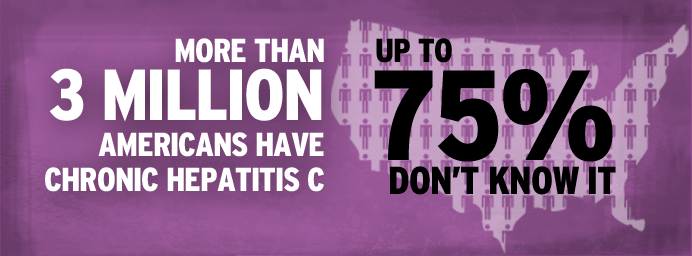
- 3.9 million people in the United States have been infected with HCV, and 3.2 million are chronically infected
- State estimates suggest that there are approximately 750,000 Californians living with chronic HCV
- Deaths related to hepatitis C nearly doubled in California between 1995 and 2004
- Baby boomers (people born 1945–1965) make up 60 percent of all chronic HCV cases in California
- 16 percent of all new chronic HCV cases reported in California in 2011 were from state prisons
Module 10: Understanding Hepatitis C, Screen 6 of 11
How Is HCV Transmitted?
Hepatitis C is much more contagious than HIV and can live outside the body for up to six weeks. Hepatitis C is transmitted by blood-to-blood contact.
How Is HCV Transmitted?
Hepatitis C is much more contagious than HIV and can live outside the body for up to six weeks. Hepatitis C is transmitted by blood-to-blood contact.
 Common Ways HCV Can Be Transmitted
Also, there’s an image on this screen that I didn’t put it. It is a great image, but since Rachel didn’t have a chance to look at it (since it wasn’t on what I gave to Matt, she might have an issue with it. In particular, she is wanting to be sure that all the images we use are copyrighted.
- Shared needles, syringes, tourniquets, cookers, water, and cottons (the most common means of transmission)
- Shared needles, ink, and other equipment for tattooing and body piercing in settings without access to sterile tatooing or piercing equipment, such as prisons and jails.
- Sexual contact involving blood or bleeding (for example, if fisting results in small anal tears and is then followed by unprotected anal sex)
- Shared razors and toothbrushes
- Accidental needlesticks in health care settings
- Reuse of medical equipment in health care settings without proper sterilization
 Module 10: Understanding Hepatitis C, Screen 7 of 11
Less Common Ways HCV Can Be Transmitted
There is increasing evidence that hepatitis C can be transmitted sexually when at least one partner is HIV-positive. There is also a low but existent rate of infection (zero to 3 percent) in long-term heterosexual couples when one partner has hepatitis C.
There is a small chance (about 6 percent) of transmission from mother to baby during birth. This chance is much higher (about 20 percent) if the mother is coinfected with HIV.
Blood transfusions and organ transplants before 1992 were sources of infection. The risk today of hepatitis C infection from a blood transfusion is very, very low.
People who don’t inject drugs but do report snorting cocaine appear to have an elevated risk of contracting hepatitis C. This has led some researchers to suggest that sharing straws to snort cocaine may be a route of transmission, but the data on this are mixed.
Module 10: Understanding Hepatitis C, Screen 8 of 11
Most Hep C Cases Are Linked to Injection Drug Use
 People who inject drugs are the No. 1 risk group for hepatitis C and comprise more than 60 percent of everyone infected in the United States. The majority of people who inject drugs become infected with hepatitis C within two years of their first injection.
The good news is that the availability of harm reduction services such as needle exchange programs, and opiate replacement therapy (like methadone or buprenorpine treatment) may have resulted resulted in decreasing rates of new infection. We have a window of opportunity with young injectors—they can stay free of hepatitis C and HIV.
Most Hep C Cases Are Linked to Injection Drug Use
People who inject drugs are the No. 1 risk group for hepatitis C and comprise more than 60 percent of everyone infected in the United States. The majority of people who inject drugs become infected with hepatitis C within two years of their first injection. The good news is that the availability of harm reduction services such as needle exchange programs, and opiate replacement therapy (like methadone or buprenorpine treatment) may have resulted resulted in decreasing rates of new infection. We have a window of opportunity with young injectors—they can stay free of hepatitis C and HIV.
Module 10: Understanding Hepatitis C, Screen 9 of 11
Acute Hepatitis C Infection
Once someone is infected with hepatitis C, the first phase of the disease is called acute infection.
It lasts from two to 12 weeks.
The most common symptom of acute infection is no symptoms.
Sometimes people with acute infection feel as if they have the flu.
Acute Hepatitis C Infection
Once someone is infected with hepatitis C, the first phase of the disease is called acute infection.
It lasts from two to 12 weeks.
The most common symptom of acute infection is no symptoms.
Sometimes people with acute infection feel as if they have the flu.
Module 10: Understanding Hepatitis C, Screen 10 of 11
What Hepatitis C Does to the Liver

Healthy Liver Cirrhotic Liver
After a person is infected with hepatitis C, the virus enters liver cells to multiply. The person’s immune system attacks the liver cells, trying to protect the body from the virus. The liver cells become inflamed and damaged, and scar tissue develops. The more the immune system fights the disease, the more scar tissue is formed.
Some people clear the virus after the acute infection period and recover completely, and people who clear the virus on their own usually do so within three to six months. However, 80 percent to 85 percent do not clear the infection; they become chronically infected.
Even chronic infection does not lead to symptoms in most people. But some people with chronic hepatitis C develop life-threatening liver diseases, including cirrhosis and liver cancer.
Module 10: Understanding Hepatitis C, Screen 11 of 11

Living with Hepatitis C
For most people, being infected with hepatitis C results in mild symptoms. Some people are infected for 20 years without experiencing any symptoms.
For people who need treatment, there are a number of medications that have a high rate of cure for hepatitis C. These are often a combination of interferon injections and ribavirin pills. But many new treatments have recently been approved, or are in the works, including those that use protease inhibitors and polymerase inhibitors.
Not everyone needs treatment.In the past, hepatitis C treatments were difficult to tolerate, but new drugs have the potential to reduce or eliminate the need for interferon, which may lead to fewer side effects. The decision about whether or not to treat chronic HCV should be made by the doctor and the patient.
Living with Hepatitis C
For most people, being infected with hepatitis C results in mild symptoms. Some people are infected for 20 years without experiencing any symptoms.
For people who need treatment, there are a number of medications that have a high rate of cure for hepatitis C. These are often a combination of interferon injections and ribavirin pills. But many new treatments have recently been approved, or are in the works, including those that use protease inhibitors and polymerase inhibitors.
Not everyone needs treatment.In the past, hepatitis C treatments were difficult to tolerate, but new drugs have the potential to reduce or eliminate the need for interferon, which may lead to fewer side effects. The decision about whether or not to treat chronic HCV should be made by the doctor and the patient.
Implementation of the Affordable Care Act in California has greatly increased opportunities for health care coverage for people living with "pre-existing conditions" like viral hepatitis. Uninsured or underinsured people should be referred to a local enrollment counselor, who can help them follow up on coverage options.
Unfortunately, undocumented immigrants are not eligible for coverage expansion through the Affordable Care Act, and safety net services are still needed. Community health centers and other safety net programs may also be available. To find a community health center in your area, visit http://findahealthcenter.hrsa.gov/widgets/
Finally, the California Hepatitis Alliance (CalHEP) maintains an online viral hepatitis services referral guide, which includes information on where to access hepatitis A and B vaccination; hepatitis C antibody testing; RNA testing and linkages to care; syringe exchange programs; and hepatitis C support groups. Download the Viral Hepatitis Services Referral Guide.
Image from HCV Coalition for the Cure
Image from HCV Coalition for the Cure