Module 11: Integrated Testing for HIV and HCV
| Site: | UCSF Collaborative Learning Environment |
| Course: | Advanced Counselor Skills Pre-Training Course |
| Book: | Module 11: Integrated Testing for HIV and HCV |
| Printed by: | Guest user |
| Date: | Friday, July 17, 2026, 8:35 PM |
Description
Module 11: Integrated Testing for HIV and HCV

Table of contents
- 1. Integrated Testing for HIV and HCV
- 2. Introduction
- 3. Why Focus on Hepatitis C?
- 4. Why Test for HIV and Hepatitis C at the Same Time?
- 5. How Can Counselors Support Clients Around HCV Testing?
- 6. If Your Client Asks, “Why Should I Get a Hepatitis C Test?”
- 7. HIV and HCV Coinfection
- 8. The Rapid HCV Test
- 9. What Does “Nonreactive” HCV Result Mean?
- 10. Understanding the HCV Window Period
- 11. What Does a “Reactive” HCV Antibody Result Mean?
- 12. People Who Test HCV Antibody-Reactive Need More Testing
- 13. Delivering Reactive HCV Results
- 14. Most Important Messages for People Who Test Hepatitis C Reactive
- 15. Learn More About Hepatitis C

Module 11:
Integrated Testing for HIV and HCV
Integrated Testing for HIV and HCV
 Module 11: Integrated Testing for HIV and HCV, Screen 2 of 15
Introduction
By the end of this module, you will be able to:
- Explain the testing process for hepatitis C and the meaning of “reactive,” “nonreactive,” and indeterminate” HCV antibody results
- Conduct a client-centered risk assessment that integrates hepatitis C and HIV prevention
- Discuss confirmatory testing and referrals with clients who test hepatitis C antibody-positive
- Discuss self-care with clients who test hepatitis C antibody-positive
- Recognize some of the limitations and dilemmas in hepatitis C counseling and testing
Module 11: Integrated Testing for HIV and HCV, Screen 3 of 15
Why Focus on Hepatitis C?
 We are focusing on integrating hepatitis C into HIV prevention counseling because:
Why Focus on Hepatitis C?
We are focusing on integrating hepatitis C into HIV prevention counseling because: - There is no vaccine for hepatitis C
- Hepatitis C becomes a chronic disease
for up to 85 percent of those infected - Hepatitis C can lead to cirrhosis and
liver cancer - Coinfection with hepatitis C and HIV is
life-threatening and on the rise
Module 11: Integrated Testing for HIV and HCV, Screen 4 of 15
Why Test for HIV and Hepatitis C at the Same Time?
 There are at least six reasons to integrate hepatitis C into HIV services:
Reason #1: A lot of people are infected with hepatitis C and don’t know it. It is a serious public health issue.
Reason #2: Many folks who are at risk for HIV are also at risk for hepatitis C, especially if they share needles and other injection equipment.
Reason #3: The California Office of AIDS did a demonstration project in 2003 that showed that HIV testing rates among people who inject drugs nearly doubled when hepatitis C testing was combined with HIV testing.
Reason #4: People who are HIV-positive are more likely to get hepatitis C, and hepatitis C is a more serious disease for people who are also HIV-positive.
Reason #5: There are four times more people with hepatitis C than HIV in the United States.
Reason #6: New HCV rapid testing allows people at risk for both diseases to screen for both diseases in one visit.
For all these reasons, understanding the connections between HIV and hepatitis C is increasingly important for us test counselors.
Why Test for HIV and Hepatitis C at the Same Time?
There are at least six reasons to integrate hepatitis C into HIV services:Reason #1: A lot of people are infected with hepatitis C and don’t know it. It is a serious public health issue.
Reason #2: Many folks who are at risk for HIV are also at risk for hepatitis C, especially if they share needles and other injection equipment.
Reason #3: The California Office of AIDS did a demonstration project in 2003 that showed that HIV testing rates among people who inject drugs nearly doubled when hepatitis C testing was combined with HIV testing.
Reason #4: People who are HIV-positive are more likely to get hepatitis C, and hepatitis C is a more serious disease for people who are also HIV-positive.
Reason #5: There are four times more people with hepatitis C than HIV in the United States.
Reason #6: New HCV rapid testing allows people at risk for both diseases to screen for both diseases in one visit.
For all these reasons, understanding the connections between HIV and hepatitis C is increasingly important for us test counselors.
Module 11: Integrated Testing for HIV and HCV, Screen 5 of 15
How Can Counselors Support Clients Around HCV Testing?
Counselors can share . . .
• Information about hepatitis C
• Their comfort in talking about injection drug use
• Harm reduction options for hepatitis C as well as HIV
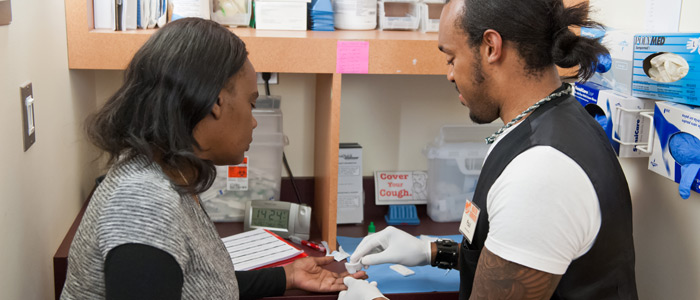
Sometimes counselors are concerned that an integrated HIV/HCV session will take more time. The California State Office of AIDS has made integration of hepatitis C and HIV counseling a priority, so we will all be working together to make it work.
How Can Counselors Support Clients Around HCV Testing?
Counselors can share . . .
• Information about hepatitis C
• Their comfort in talking about injection drug use
• Harm reduction options for hepatitis C as well as HIV
Sometimes counselors are concerned that an integrated HIV/HCV session will take more time. The California State Office of AIDS has made integration of hepatitis C and HIV counseling a priority, so we will all be working together to make it work.
 Module 11: Integrated Testing for HIV and HCV, Screen 6 of 15
If Your Client Asks, “Why Should I Get a Hepatitis C Test?”
Here are a few reasons:
- If you do have hepatitis C, it’s important to know so you can protect your liver.
- If lots of friends are living with hep C, you might assume you are too, but you may not be—and if you are not, you may be able to keep from getting hep C.
- Often hepatitis C has no symptoms for many years, so testing is the only way to find out if you’re infected.
- Coinfection with HIV and hepatitis C is serious, so it’s important for you and your doctor to know.
Module 11: Integrated Testing for HIV and HCV, Screen 7 of 15
HIV and HCV Coinfection
 Coinfection with hepatitis C and HIV can be serious. HIV appears to make hepatitis C disease progress more quickly, leading sooner to serious liver damage and liver failure. But hepatitis C does not seem to make HIV disease worse.
Many drugs used to treat HIV-related infections are toxic to the liver, so it is important for doctors to be knowledgeable about treating coinfected patients.
There is significant evidence of hepatitis C being transmitted sexually when one of the partners is coinfected with HIV and hepatitis C. Among those who share needles, people with HIV are more likely to transmit hepatitis C to others because their hepatitis C viral loads are higher.
HIV and HCV Coinfection
Coinfection with hepatitis C and HIV can be serious. HIV appears to make hepatitis C disease progress more quickly, leading sooner to serious liver damage and liver failure. But hepatitis C does not seem to make HIV disease worse.Many drugs used to treat HIV-related infections are toxic to the liver, so it is important for doctors to be knowledgeable about treating coinfected patients.
There is significant evidence of hepatitis C being transmitted sexually when one of the partners is coinfected with HIV and hepatitis C. Among those who share needles, people with HIV are more likely to transmit hepatitis C to others because their hepatitis C viral loads are higher.
Module 11: Integrated Testing for HIV and HCV, Screen 8 of 15
 The Rapid HCV Test
 Now that we have talked about some of the reasons to test for HCV, let’s look at the test itself.
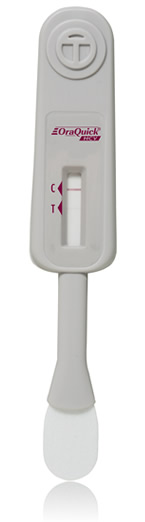
There are several different hepatitis C tests. Most sites do a screening test that checks for antibodies to hepatitis C. The OraQuick HCV Rapid Antibody Test that you will be learning to conduct in the live BCST is an antibody screening test.
You may have already seen or worked with the OraQuick ADVANCE Rapid HIV-1/2 Antibody Test. If so, you will notice how similar the HIV test (on the left) is to the HCV test (on the right).
The Rapid HCV TestNow that we have talked about some of the reasons to test for HCV, let’s look at the test itself.There are several different hepatitis C tests. Most sites do a screening test that checks for antibodies to hepatitis C. The OraQuick HCV Rapid Antibody Test that you will be learning to conduct in the live BCST is an antibody screening test.
You may have already seen or worked with the OraQuick ADVANCE Rapid HIV-1/2 Antibody Test. If so, you will notice how similar the HIV test (on the left) is to the HCV test (on the right).
Module 11: Integrated Testing for HIV and HCV, Screen 9 of 15

What Does “Nonreactive” HCV Result Mean?
A “nonreactive” result on a hepatitis C antibody screening test means that antibodies were not detected in the blood sample—similar to a “negative” result on an HIV antibody test. This usually means:
What Does “Nonreactive” HCV Result Mean?
A “nonreactive” result on a hepatitis C antibody screening test means that antibodies were not detected in the blood sample—similar to a “negative” result on an HIV antibody test. This usually means:
- The client is not infected with hepatitis C
OR
- The client is infected but is still in the window period. In other words, not enough time has passed for the body to produce detectable antibodies
Module 11: Integrated Testing for HIV and HCV, Screen 10 of 15
Understanding the HCV Window Period
The average window period for hepatitis C is two months, and 97 percent of people develop antibodies by the end of six months. The figure below shows both the window period for HIV and for HCV.
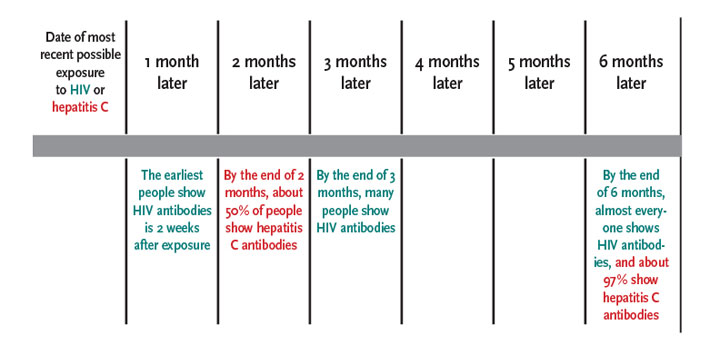
As you know, the window period for HIV is two weeks to six months, with many people developing detectable antibodies by the third month.
To make it easier for clients to understand, many counselors say: “Most people develop antibodies to both HIV and hepatitis C within three months. To be as sure as possible, retest six months after your last possible exposure to each disease.” Remember: Exposures that risk hepatitis C transmission are not necessarily the same as those that risk HIV transmission.
Understanding the HCV Window Period
The average window period for hepatitis C is two months, and 97 percent of people develop antibodies by the end of six months. The figure below shows both the window period for HIV and for HCV.
As you know, the window period for HIV is two weeks to six months, with many people developing detectable antibodies by the third month.
To make it easier for clients to understand, many counselors say: “Most people develop antibodies to both HIV and hepatitis C within three months. To be as sure as possible, retest six months after your last possible exposure to each disease.” Remember: Exposures that risk hepatitis C transmission are not necessarily the same as those that risk HIV transmission.
Module 11: Integrated Testing for HIV and HCV, Screen 11 of 15
What Does a “Reactive” HCV Antibody Result Mean?
When a person tests positive for hepatitis C antibodies, we say that their test is “reactive.” This is because testing HCV-antibody positive has a different meaning from testing HIV-antibody positive.
With HIV, once someone has a confirmed positive for HIV antibodies, we know that person has HIV.

With hepatitis C, about 20 percent of people (10 out of 50) clear the disease on their own. That means they’re no longer infected, but they still have the antibodies. This is like the measles: If you were infected once, you continue to have the antibodies even after the disease is gone. It’s the same principle for hepatitis C, except that with hepatitis C, only 20 percent of the people who get hepatitis C clear the infection on their own.
So we say that someone whose test shows detectable HCV antibodies had a “reactive” test. This means that even though the test reacted to the antibodies, the person may not still be living with chronic HCV. The next step for people who test HCV-reactive is more testing.
What Does a “Reactive” HCV Antibody Result Mean?
When a person tests positive for hepatitis C antibodies, we say that their test is “reactive.” This is because testing HCV-antibody positive has a different meaning from testing HIV-antibody positive.
With HIV, once someone has a confirmed positive for HIV antibodies, we know that person has HIV.
With hepatitis C, about 20 percent of people (10 out of 50) clear the disease on their own. That means they’re no longer infected, but they still have the antibodies. This is like the measles: If you were infected once, you continue to have the antibodies even after the disease is gone. It’s the same principle for hepatitis C, except that with hepatitis C, only 20 percent of the people who get hepatitis C clear the infection on their own.
So we say that someone whose test shows detectable HCV antibodies had a “reactive” test. This means that even though the test reacted to the antibodies, the person may not still be living with chronic HCV. The next step for people who test HCV-reactive is more testing.
Module 11: Integrated Testing for HIV and HCV, Screen 12 of 15

People Who Test HCV Antibody-Reactive
Need More Testing
People who test hepatitis C antibody-reactive need to be referred to a doctor for further testing to see if they still have the virus. This “viral load” test is usually a polymerase chain reaction (PCR), which is also one of the tests doctors use to test for HIV viral load. PCR determines whether a person has a chronic case of hepatitis C.
People Who Test HCV Antibody-Reactive
Need More Testing
People who test hepatitis C antibody-reactive need to be referred to a doctor for further testing to see if they still have the virus. This “viral load” test is usually a polymerase chain reaction (PCR), which is also one of the tests doctors use to test for HIV viral load. PCR determines whether a person has a chronic case of hepatitis C.
 Module 11: Integrated Testing for HIV and HCV, Screen 13 of 15
Delivering Reactive HCV Results
Telling someone that they may have a serious disease can be difficult. And because hepatitis C tests are most often given to injection drug users, the rate of hepatitis C-reactive test results is very high, which can be stressful for counselors.
Disclosing hepatitis C antibody-reactive results is also complicated by the lack of resources for people with hepatitis C. Make sure you know what is available for medical, psychosocial, and peer support in your area, and be clear and open about what is not. Recent advances in HCV treatment and coverage expansion through the Affordable Care Act are changing the landscape of care and resources for people living with HCV.
You can assist your client by providing information about living with hepatitis C, as well as referrals for follow-up testing, medical care, and psychosocial support.
 Module 11: Integrated Testing for HIV and HCV, Screen 14 of 15
Most Important Messages for People Who Test Hepatitis C Reactive
- A reactive test result means you have had hepatitis C infection in the past and may or may not have hepatitis C infection now.
- You need additional testing to find out if have hepatitis C infection now. The follow-up test looks for the hepatitis C virus in your blood. We can help you find a place to get tested.
- Hepatitis C is often a mild disease. Many people live for decades without symptoms.
- If you have hepatitis C, it is important to get immunized against hepatitis A and hepatitis B
- There are many things that people with hepatitis C can do to protect their health.
- Alcohol is extremely toxic to the liver. Stopping or limiting how much you drink is one of the most important things you can do to protect your health while you wait to find out if you have chronic hepatitis C infection.
Module 11: Integrated Testing for HIV and HCV, Screen 15 of 15
 Learn More About Hepatitis C
HIV Counselor Perspectives, Summer 2013:
Rapid Hepatitis C Testing by HIV Test Counselors
California Department of Public Health
Office of Viral Hepatitis Prevention
http://www.cdph.ca.gov/programs/pages/ovhp.aspx
CDPH Hepatitis C Webpage
http://www.cdph.ca.gov/healthinfo/discond/Pages/HepatitisC.aspx
Centers for Disease Control and Prevention (CDC)
www.cdc.gov/hepatitis
California Viral Hepatitis Services Referral Guide
http://calhep.org/referralguide
Learn More About Hepatitis CHIV Counselor Perspectives, Summer 2013:
Rapid Hepatitis C Testing by HIV Test Counselors
California Department of Public Health
Office of Viral Hepatitis Prevention
http://www.cdph.ca.gov/programs/pages/ovhp.aspx
CDPH Hepatitis C Webpage
http://www.cdph.ca.gov/healthinfo/discond/Pages/HepatitisC.aspx
Centers for Disease Control and Prevention (CDC)
www.cdc.gov/hepatitis
California Viral Hepatitis Services Referral Guide
http://calhep.org/referralguide