Week 7 Responses

Week 7 Responses

by Jean Digitale -
Number of replies: 30

Mendola, P. et al. Controlled direct effects of preeclampsia on neonatal health after accounting for mediation by preterm birth. Epidemiology 26, 17–26 (2015). 

What is the primary discipline of the authors?

Epidemiology and OB-GYN 

Draw a DAG representing the implicit or explicit causal model explored in this paper (you do not need to post your DAG, but we will try to discuss in class).

 What is the exposure of interest?

Preeclampsia

What is the outcome of interest?

Neonatal complications studied included:

-        perinatal mortality ≥23 weeks of gestation

-        small for gestational age

-        NICU admission

-        respiratory distress syndrome

-        transient tachypnea of the newborn

-        anemia

-        apnea

-        asphyxia

-        peri- or intraventricular hemorrhage

-        cardiomyopathy

What is the hypothesized mediator of interest and how is it measured?

Preterm birth – estimates of gestational age were obtained from medical records

Describe the modeling approach and briefly report the estimated total, direct, and indirect effects (if these are reported). 

Total effects of preeclampsia on neonatal outcomes were estimated using logistic regression with generalized estimating equations adjusted for exposure-outcome confounders.

To estimate controlled direct effects, the authors used marginal structural models with stabilized inverse probability weights. They used weighted logistic regression with GEE to estimate the parameters of the model. Two sets of weights were estimated – one for dichotomous preeclampsia status (with exposure-outcome and exposure-mediator confounders) and one for the categories of pre-term status (additionally included mediator-outcome confounders that could be caused by preeclampsia).

Total effects for the many outcomes ranged from 1.6-4.2. Direct effects ranged from 1.5-3.2, although for cardiomyopathy and anemia, the 95% CIs included 1.

If the direct effect is reported, would you describe this as a natural direct effect, a controlled direct effect, or something else?

Controlled direct effects setting gestational age to >=37 weeks

Do you think there is potential measurement error in the mediator and how would that affect the results?

It is possible there is measurement error if the MD estimated the gestational age incorrectly or it was recorded incorrectly. If such error was non-differential, I believe the indirect path through pre-eclampsia wouldn’t be fully blocked, thus the indirect effect would be underestimated. This would overestimate the direct effect. It is also possible such error could be differentially higher among those with preeclampsia, but I’m not sure which direction the error would go or how it would affect the estimation of the CDE.

Do you think there are unmeasured confounders of the mediator-outcome association and how would that affect the results of the mediation analysis?

The authors were concerned about lack of data on maternal infection (potential mediator-outcome confounder). They did an extensive sensitivity analyses and found it difficult to plausibly explain the magnitudes of the observed associations.

Do you have any critiques of the paper? 

It would’ve been helpful to see absolute increases in risk rather than just ORs, especially as some outcomes, such as NICU admission, were quite prevalent.

In reply to Jean Digitale

Re: Week 7 Responses

by Adrienne Epstein -

Please identify a quantitative research article evaluating mediation in your field and provide the citation.

Druetz T. Evaluation of direct and indirect effects of seasonal malaria chemoprevention in Mali. Scientific Reports. 2018;8(1):8104.

What is the primary discipline of the authors?

This paper has one author, Dr. Thomas Druetz. He is an Assistant Professor in the Department of Social and Preventive Medicine, School of Public Health, at University of Montreal. His doctorate is in public health.

Draw a DAG representing the implicit or explicit causal model explored in this paper (you do not need to post your DAG, but we will try to discuss in class).

What is the exposure of interest?

Seasonal malaria chemoprevention (SMC) among children under 5 (e.g., mass drug administration)

What is the outcome of interest?

Anemia

What is the hypothesized mediator of interest and how is it measured?

Malaria test positivity, measured with rapid diagnostic test

Note that the author hypothesizes that all of the effect of SMC should be through anemia, and therefore there should be no direct effect. In other words, the mediation analysis was performed as a placebo/falsification test. The authors therefore considered this mediator as their primary outcome of interest, as they were primarily attempting to measure the effectiveness of SMC on malaria. Anemia was considered a secondary outcome.

Describe the modeling approach and briefly report the estimated total, direct, and indirect effects (if these are reported). 

The author used a generalized structural equation model with malaria test positivity considered as a mediator between SMC and anemia. The author specified three Poisson regression equations, with the following outcomes: exposure to SMC, malaria test positivity, and anemia positivity, and included a set of confounders (different for each outcome model) selected a priori in the models. To calculate the indirect effect of SMC on anemia, the authors performed the product method, multiplying the coefficient for SMC with malaria positivity (the mediator) as outcome with the coefficient for malaria positivity with anemia as the outcome.

Direct effect of SMC on anemia: RR = 0.99, 95% CI 0.95, 1.03

Indirect effect of SMC on anemia: 0.82, 95% CI 0.79, 0.85

The author does not report a total direct effect of SMC on anemia.

Note that the author also found that SMC reduced malaria test positivity (both the mediator and primary outcome of interest). RR = 0.56, 95% CI 0.51, 0.61.

If the direct effect is reported, would you describe this as a natural direct effect, a controlled direct effect, or something else?

The author uses the classic Barron & Kenny method, where the direct effect is simply the coefficient on the exposure when the mediator is included in the model. I am not sure whether this is considered a NDE or a CDE, but I am guessing it is a controlled direct effect because including the mediator in the model suggests holding it constant when evaluating the effect of the exposure on the outcome.

Do you think there is potential measurement error in the mediator and how would that affect the results?

There may be measurement error of malaria positivity, as rapid diagnostic tests do not have perfect sensitivity or specificity. However, since both the mediator and the outcome are binary, it is uncertain what direction this would bias the results.

Do you think there are unmeasured confounders of the mediator-outcome association and how would that affect the results of the mediation analysis?

Perhaps nutritional status could affect both malaria and anemia. If this were the case, there would be an open path between malaria positivity and anemia. This could make the exposure (SMC) look more beneficial than it actually is, since the effect of malaria on anemia would appear worse than it actually is, making the protective effect of SMC appear even more beneficial.

Do you have any critiques of the paper? 

First, the author explains that they use a latent selection model to measure exposure since SMC was not randomized. However, the author gave no details for how this model was specified and I would have preferred more information. Second, it would be helpful to have more of a discussion regarding how this falsification test/mediation analysis is helpful, e.g., what bias the author was attempting to test/disprove.


In reply to Adrienne Epstein

Re: Week 7 Responses

by Sandeep Brar -

Long-term kidney outcomes among users of proton pump inhibitors without intervening acute kidney injury. Xie Y, Bowe B, Li T, Xian H, Yan Y, Al-Aly Z. Kidney Int. 2017 Jun;91(6):1482-1494.

The authors are biostatisticians, epidemiologists and nephrologists at Saint Louis University and Washington University.

The primary exposure of interest was acid suppression therapy. Participants with a first acid suppression therapy prescription containing esomeprazole, lansoprazole, omeprazole, pantoprazole or rabeprazole were classified as PPI users.

The primary outcomes of interest were incident chronic kidney disease (CKD) and end-stage renal disease (ESRD). Incident CKD was defined as two estimated glomerular filtration rate (eGFR) measurements < 60 ml/min per 1.73 m2 at least 90 days apart and the second eGFR measurement was considered the date of CKD occurrence. ESRD was ascertained from the USRDS database.

The hypothesized mediator of interest was acute kidney injury (AKI) defined as an increase in serum creatinine value >50% or 0.3 mg/dl within 90 days.

The authors used mediation analysis to evaluation the proportion of the total effect that could be explained by AKI. They used accelerated failure time models with a Weibull distribution for time to incident CKD and ESRD and logistic regression for mediator (ever experienced AKI or not). The proportion of PPI effect mediated by AKI was 45.47% for incident CKD (total effect on mean survival time 78.63%) and 46.72% for ESRD or > 50% decrease in eGFR (total effect on mean survival time 83.66%). ­The authors do not report the direct effect.

There is likely measurement error of the mediator AKI because participants who do not seek medical care and have blood work done to measure renal function would have undetected AKI. This is problematic because AKI is typically asymptomatic. If there is no interaction between PPI and AKI, the indirect effect will be biased towards the null the direct effect will be biased away from the null.

The authors discuss which covariates are adjusted for in the main analysis, but they do not specifically state which covariates were adjusted for in the mediation analysis. Presumably, they adjusted for the same variables which include first eGFR, age, race, sex, smoking, BMI, diastolic and systolic blood pressure, nonsteroidal anti-inflammatory drug, angiotensin-converting enzyme inhibitors/angiotensin receptor blocker, number of outpatient serum creatinine measurements, number of hospitalizations, diabetes mellitus, cardiovascular disease, peripheral artery disease, cerebrovascular disease, chronic lung disease, hepatitis C, HIV, dementia, cancer, gastroesophageal reflux disease, upper gastrointestinal tract bleeding, ulcer disease, Helicobacter pylori infection, Barrett’s esophagus, achalasia, stricture, and esophageal adenocarcinoma. The authors adjusted for a large number of covariates however it is still possible that there are some unmeasured confounders. How an unmeasured confounder of the mediator outcome association affects the results of the mediation analysis depends on a bias factor which will decrease the direct effect and increase the indirect effect.

The authors should have done a sensitivity analysis to examine how an unmeasured confounder of the mediator and outcome could affect the results of the mediation analysis. It would be useful to see a table with a range of sensitivity analysis parameters with corrected direct and indirect effect estimates. Also, the authors only showed the proportion of PPI effect mediated by AKI however it would be helpful to see the different effect estimates from the models along with an explanation of which covariates were adjusted for in each model.

In reply to Sandeep Brar

Re: Week 7 Responses

by Laura Koth -

Got tickets to Warriors game! Got to skip this week 

In reply to Sandeep Brar

Re: Week 7 Responses

by Jean Digitale -

That's interesting that AKI is usually asymptomatic. Given that you defined it multiple ways for your data project, how do their definitions compare to yours? Could there also be measurement error due to their definition of AKI?

In reply to Sandeep Brar

Re: Week 7 Responses

by Maria Glymour -

Sandeep

Nice example.  Note that "bias factor which will decrease the direct effect and increase the indirect effect" is not always true.  If the bias factor is accounting for a confounder of the mediator outcome, it depends on whether the confounder has the same direction of effect on the mediator as the exposure.  

m


In reply to Adrienne Epstein

Re: Week 7 Responses

by Jean Digitale -

Interesting article, Adrienne! Can you help me understand why the mediator and outcome being binary make it more difficult to determine the direction of the bias from measurement error in the mediator?

In reply to Jean Digitale

Re: Week 7 Responses

by Adrienne Epstein -

Great question, Jean. I'm not sure I fully understand it either..! I got caught up in thinking beyond ONLY measurement error of the mediator and also considering measurement error of the outcome, which will introduce bias toward the null for both indirect and direct effects when the outcome is not continuous.

However, I believe if there were only mismeasurement of the mediator the bias would be toward the null for the indirect effect and away from the null for the direct effect. This is kind of odd in this scenario because their whole argument was that finding a null indirect effect was a further argument for their main hypothesis. However, it's possible that measurement error could be leading to this null result!

Realistically, I'm sure there is mismeasurement of both the mediator and the outcome, in which case it's hard to say which direction the bias would be for the direct effect (although the indirect effect's bias would still average toward the null).

In reply to Adrienne Epstein

Re: Week 7 Responses

by Matthew -

Please identify a quantitative research article evaluating mediation in your field and provide the citation.

Title: Preeclampsia mediates the association between shorter height and increased risk of preterm delivery

https://www.ncbi.nlm.nih.gov/pubmed/29106560

PMID: 29106560


What is the primary discipline of the authors?

Lead author is a MD, PhD, MPH. Authors work in public health, OBGYN, Neonatal medicine, and advanced pediatric care.


Draw a DAG representing the implicit or explicit causal model explored in this paper (you do not need to post your DAG, but we will try to discuss in class).

Maternal short stature èPre-EclampsiaèPreterm birth


What is the exposure of interest?

Maternal short stature


What is the outcome of interest?

Preterm birth (<37 weeks gestational age)


What is the hypothesized mediator of interest and how is it measured?

Pre-eclampsia


Preeclampsia was diagnosed clinically by obstetricians in each hospital using a unified national guideline. The guidelines defined it as “systolic blood pressure over 140mmHg or diastolic blood pressure above 90mmHg that emerges after 20 weeks’ gestation with significant proteinuria > 300 mg/day.”


Describe the modeling approach and briefly report the estimated total, direct, and indirect effects (if these are reported). 

Basics of the study:

They looked at 218, 412 healthy woman singleton pregnancies 2005-2011 from a Japanese database. They assessed the risk of preterm delivery in relation to height using multivariate analysis, and how the association was mediated by risk of preeclampsia using mediation analysis. 

Model approach:

They stated that they selected to use the Vander Weele method for mediation analysis. This was preferred over the original Baron and Kenny model becauseit has been shown that the lack of account of possible exposure-mediator interactions could miscalculate the mediation effect.


If the direct effect is reported, would you describe this as a natural direct effect, a controlled direct effect, or something else?

They indeed reported the direct effects. This provided both the natural direct effects and the natural indirect effects.


Do you think there is potential measurement error in the mediator and how would that affect the results?

I would think there the data on the mediator has very limited measurement error because the diagnostic criteria for preeclampsia is fairly non-subjective since its all based on blood pressure and proteinuria. I think if there is some error its unlikely to be biased in one direction or the other.


Do you think there are unmeasured confounders of the mediator-outcome association and how would that affect the results of the mediation analysis?

Confounders of pre-eclampsia and preterm birth could include smoking or poor diet which may directly. 


Do you have any critiques of the paper? 

            I’ve been hanging around Dr. Martin too long. I think in a paper like this having a DAG would be very beneficial. I think having a DAG is a great way for the author to describe what they believe are the important variables are when trying to realistically describe the intended relationship. Even having additional variables in the DAG even if they aren’t included in the analysis is useful because it at least communicates to the readers that they’ve at least considered the 
In reply to Jean Digitale

Re: Week 7 Responses

by Teresa Kortz -

Diaphragm and lubricant gel for prevention of HIV acquisition in southern African women: a randomised controlled trial

Link: Original RCT – https://www-ncbi-nlm-nih-gov.ucsf.idm.oclc.org/pubmed/17631387

Primary discipline of the authors: Medicine (Women’s and Reproductive Health, Internal Medicine/Preventative Medicine, HIV/Infectious disease, Perinatology) and epidemiology and biostatistics

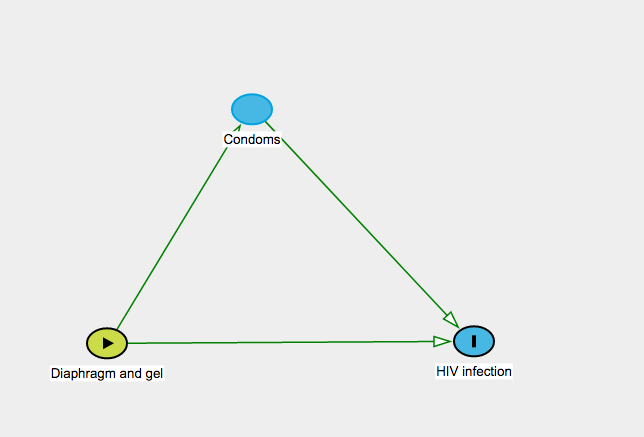
DAG attached

Exposure of interest: This was an RCT so the intervention was a clinician-fitted diaphragm, a supply of lubricant gel, and male condoms. The control group received condoms only.

Outcome of interest: Incident HIV infection

Hypothesized mediator: Male condom use, which was measured with a face-to-face clinician-administered questionnaire during quarterly follow-up visits. The researchers observed the same incidence of HIV infection in both arms, but decreased condom use in the intervention group. The hypothesis is that condom use is in a causal pathway between diaphragm use and HIV incidence.

Modeling approach:  The authors performed an intention to treat (ITT) analysis with subgroup analyses, a per-protocol analysis, and safety assessments. The primary ITT analysis compared HIV incidence between groups using a stratified Cox model with a binary indicator of group assignment as the only predictor variable and stratified by study site. Subgroup analyses included age, education level, coital frequency, partner circumcision, sexually transmitted infections, HSV2 infection, behavioral risk, partner risk, contraceptive use, and condom use. The per-protocol analysis repeated the between-group comparison of HIV incidence, excluding follow-up periods where participants in the intervention group did not report use of the diaphragm at last sexual contact. Person-time in the intervention group was included if there was reported diaphragm use, with or without gel and/or condom use. Person-time in the control group was excluded if there was reported diaphragm use and included even if there was no reported condom use.

Estimated total, direct, and indirect effects: The authors report an overall hazard ratio of 1.05 (0.84–1.32), which describes the total effect. They report a hazard ratio for no condom use in the past 3 months at the time of enrollment (0.74, 0.46-1.19), but not a HR adjusting for condom use after randomization. Since this is an RCT, adjusting for post-randomization factors could negate randomization. The authors also performed a per-protocol analysis, but person-time was allotted based on compliance with the diaphragm alone and not condom use in either arm. Therefore, there is not a good estimate of the direct or indirect effects. Since a direct effect is not reported, I can’t comment on whether it is a natural direct effect, a controlled direct effect, or something else.

Potential measurement error in the mediator and effect on results: There could definitely be measurement error in the results. I am going to focus on the effect in the intervention group. As part of the study, clinicians taught the importance of condom use at the initial visit and then reinforced this at subsequent visits. Condom use was self-reported by study participants to clinicians and was subject to both recall bias and inflation. Recall bias could cause individuals newly diagnosed with an STI/pregnancy/HIV to report decreased condom use and/or healthy individuals to report increased condom use. This could result in differential misclassification of the mediator with respect to the outcome and could make condom use appear more favorable than it really is. However, given that this is an RCT and that there were similar rates of events in both arms, I don’t think that this affected the overall HR and study conclusion. Participants may also have inflated their reported condom use knowing what the clinicians wanted to hear. If this was the case, then condom use may be even lower than reported and diaphragm use may actually be more beneficial than a direct effect analysis would show.  

Unmeasured confounders of the mediator-outcome association: Confoudners like inter-partner violence, household hierarchies, socio-economic status, and female education level could all influence both condom use and HIV incidence. Being in a violent relationship, having less household power, being in a lower SES class, and having lower educational attainment are all likely associated with decreased condom use and increased HIV infection rates. If a mediation analysis did not take into consideration these important confounders, results would be biased making decreased condom appear to have a stronger association with HIV.

Critiques of the paper: Given the observed lack of difference between groups and the hypothesis that the reason for no difference was that the comparison was actually between diaphragm + gel + sub-optimal condom use vs. better condom use, I would have liked to have seen a mediation analysis that estimated the direct and indirect effects of mediation. Also, this was a somewhat expected outcome and I would have liked to have seen a more rigorous and unbiased method for measuring condom adherence in the two groups.


Attachment Screen Shot 2019-05-16 at 5.25.36 PM.png
In reply to Teresa Kortz

Re: Week 7 Responses

by Maria Glymour -

Teresa,

The MIRA trial was rather heartbreaking I thought- this is a case where a better design might have been really helpful, if they had anticipated these potentially offsetting effects.  This could also be a valuable setting for an IV analysis to estimate effects of different mediators. 

It's an interesting example because you rarely see situations where you believe there are plausibly opposite treatment effects. 

This study really influenced how I thought about selection into adherence, because it's clear that when the treatment is not masked (pretty much every behavioral trial), there's a potential that people most likely to benefit will adhere more closely.  We wrote about that in this:  https://www.ncbi.nlm.nih.gov/pubmed/26628424

Maria

In reply to Jean Digitale

Re: Week 7 Responses

by Sarah Dobbins -

Original article: Cognitive aging in black and white Americans: Cognition, cognitive decline, and incidence of Alzheimer disease dementia. doi:10.1097/EDE.0000000000000747 in Epidemiology


What is the primary discipline of the authors?: Epidemiology and Internal medicine, one neurologist

What is the exposure of interest?: A=Racial group (black or white, self identified)

What is the outcome of interest?: Y=Rate of cognitive decline over 18 years and Alzheimer’s Disease risk

What is the hypothesized mediator of interest and how is it measured? M= education; The “effect” of race on education is mediated by educational attainment. Participants self-reported their race and years of education

Describe the modeling approach and briefly report the estimated total, direct, and indirect effects: First they used GEE regression models (with identity links) to compare black and white participants’ baseline cognitive performance and rate of cognitive decline (not the mediation analysis). They then used a causal mediation analysis to obtain total effects, natural direct effect, and controlled direct effects fixing education at 12 years and 16 years, then looked at the difference between these two estimates. 

 They described the effect of race on these outcomes transmitted through years of education (indirect effect) and the effect of race operating through pathways other than years of education (direct effect). They do not report the indirect effect, but they do report the total effect and the controlled and natural direct effects. The natural direct effects represent the “Estimated effect of race (black compared with white) on cognitive performance through pathways other than those involving years of education.” While the controlled direct effect is the “Estimated effect of race (black compared with white) on cognitive performance under the [hypothetical] scenario in which everyone attains the same specified years of education.” They adjusted for age, sex, and childhood socioeconomic resources. 

Do you think there is potential measurement error in the mediator and how would that affect the results? Participants self-reported their race and years of education, therefore there may be inaccuracies in reported education. If one racial group over-estimated their years of education, this would affect the controlled direct effect. 

Do you think there are unmeasured confounders of the mediator-outcome association and how would that affect the results of the mediation analysis? A confounder of the mediator-outcome relationship would be something that influences educational attainment and late-life cognitive outcomes. This could be childhood SES, which the authors control for, but could also include psychological trauma (e.g. PTSD, childhood abuse/maltreatment) or physical trauma (e.g. TBI, head injuries). Another unmeasured confounder could be early substance use, though I don’t believe this has been firmly established as having an effect on cognitive outcomes. This unmeasured confounder may lead to biased results for the estimate.

Do you have any critiques of the paper? In general I like this paper, but I noticed that they didn’t control for any covariates besides race, age, and gender. I would think vascular risk factors might also be important to consider, especially given the racial disparities and inequities in the prevalence of diabetes and undertreated hypertension.


I’m hoping someone can confirm this statement about controlled direct effects: The estimated effect of race (black compared with white) on cognitive performance under the scenario in which everyone attains the same specified years of education. aka, the effect of black race (A) on cognitive performance (Y) not mediated through education (M), which is the effect after intervening to fix the mediator to some value m. Is this right?

Also, they say the proportion of effect eliminated by setting years of education to specified level is (Total Effect - Controlled Direct Effect)/(Total Effect). In the scenario in which everyone gets 16 years of education, this is −0.69 - −0.29 / -.69 = .579. This means that, when everyone gets 16 years education, 57.9% of the total effect of race on cognitive performance is not mediated by education?
In reply to Sarah Dobbins

Re: Week 7 Responses

by Maria Glymour -

Sarah

You have the definition of a controlled direct effect right. 

You wouldn't say "when everyone gets 16 years education, 57.9% of the total effect of race on cognitive performance is not mediated by education?" but rather

" in a world where everyone gets 16 years of education, the effect of race on cognition is reduced by 58% compared to the situation where education is allowed to be whatever it is in the actual world."

Maria


In reply to Jean Digitale

Re: Week 7 Responses

by Scott Lu -

Please identify a quantitative research article evaluating mediation in your field and provide the citation.

I couldn’t find a Kaposi sarcoma-focused paper dealing with quality of life and (explicity) mediation so offer this one that is still QOL-focused:

Holbein CE1Veldtman GR2Moons P3Kovacs AH4Luyckx K5Apers S6Chidambarathanu S7Soufi A8Eriksen K9Jackson JL10Enomoto J11Fernandes SM12Johansson B13Alday L14Dellborg M15Berghammer M16Menahem S17Caruana M18Kutty S19Mackie AS20Thomet C21Budts W22White K23Sluman MA24Callus E25Cook SC26Khairy P27Cedars A28APPROACH-IS consortium and the International Society for Adult Congenital Heart Disease (ISACHD). Perceived Health Mediates Effects of Physical Activity on Quality of Life in Patients With a Fontan Circulation. Am J Cardiol. 2019 Apr 10. pii: S0002-9149(19)30398-4. doi: 10.1016/j.amjcard.2019.03.039. [Epub ahead of print]

What is the primary discipline of the authors?

(First 3 authors:)

Christina E Holbein, PhD is a Clinical Child and Adolescent psychologist at Children’s Hospital of Philadelphia

Gruschen Rodney Veldtman, MD is a cardiologist

Philip Moons, PhD RN is a professor of healthcare and nursing science in Leuven, Belgium

Draw a DAG representing the implicit or explicit causal model explored in this paper (you do not need to post your DAG, but we will try to discuss in class).

I’ll describe it so this section isn’t empty, at least: 3 nodes: exposure, mediator, and outcome.  Arrow from exposure to outcome and to mediator, another arrow from mediator to outcome.

Exposure: physical activity

Outcome: QOL

Mediator (1): Perceived general health (separate from QOL)

Mediator (2):  NYHA classification

What is the exposure of interest?

Exposure: physical activity’

Acquired via patient-reported outcome using the Health Behaviors Scale – Congenital Heart Disease.  Items include walking commute to work, sport participation, and weekly hours in minimal, moderate, and vigorous physical activity.  Secondarily, responses were used to generate another variable that reflected whether participants met the WHO guidelines for physical activity

What is the outcome of interest?

Outcome: QOL

               Assessed via the Life Scale QOL tool.

What is the hypothesized mediator of interest and how is it measured?

Mediator (1): Perceived general health (separate tool that used for outcome)

               Assessed by a single item from the SF-12v2.

Mediator (2):  NYHA classification

               Assessed by patient report on their functional limitations

Describe the modeling approach and briefly report the estimated total, direct, and indirect effects (if these are reported). 

They used the PROCESS macro to test whether perceived health status variables mediated the association between physical activity and QOL using 1,000 bootstrap samples.  The PROCESS macro uses ordinary least squared path analysis and listwise deletion for missing data and tests the indirect effect (in this case the relationship between physical activity and QOL that is accounted for by the associations between the effect of physical activity of perceived health status at various physical activity levels).

If the direct effect is reported, would you describe this as a natural direct effect, a controlled direct effect, or something else?

No direct effects were reported in the paper.

Do you think there is potential measurement error in the mediator and how would that affect the results?

There could be: perceived general health is a potentially broad concept.  The SF12v2 is a shortened version of the SF-36v2 and uses a single item with a 5-point Likert-like answer scale that may be open to misinterpretation.  The definition of “good health” can vary wildly between individuals, however this type of QOL tool is formulated, in part, to attempt to standardize those variations as much as possible.  This is a commonly used way of measuring perceived health and has proven both accurate and useful before and can provider 5 different levels of physical activity for analysis. 

To answer the question of potential measurement error: yes that is possible, however part of challenging such in this paper might require challenging an entire body of research and I am a bit apprehensive to say such so openly.  Otherwise there is certainly room for error in the coding and data management side of participant responses as well.

Do you think there are unmeasured confounders of the mediator-outcome association and how would that affect the results of the mediation analysis?

There could be: the authors even mention this, suggesting geographic and cultural differences which may have impacted results.  These confounders could skew results both towards and away from the null: e.g. the degree of quality of life outcomes owing to higher perceived health vs. lower perceived health could shift both in favor of a higher QOL outcome associated with higher perceived health in those with low physical activity or vice versa. The study was also cross-sectional, preventing clear conclusions as to causality and temporality in the exposure-outcome relationship.

Do you have any critiques of the paper? 

There is also concern for treatment types: a younger Fontan patient is likely to have undergone a total cardiopulmonary anastomosis while and older Fontan patient most likely had a classic Fontan procedure.  The difference in outcomes may be significant, however this may also have been reported on in the authors’ reference.

Overall this paper strikes me as a high quality QOL cross-sectional study.  The study population is low, and the number of different countries and areas is high however this study focuses on the relatively rare condition of Fontan circulation. 


In reply to Scott Lu

Re: Week 7 Responses

by Sarah Raifman -

Sezgin UA, Punamaki RL. Arch Womens Ment Health. 2019 Apr 6. Impacts of early marriage and adolescent pregnancy on mental and somatic health: the role of partner violence. 

https://link.springer.com/article/10.1007%2Fs00737-019-00960-w

Exposure: early marriage and adolescent pregnancy

Outcome: self-reported mental and somatic health

Hypothesized mediatorTwo possible mediators: partner violence by spouse and partner violence by woman herself. Measured indirectly using a 10-item scale covering physical assault, sexual coercion, psychological aggression, and negotiation. Principal components analysis was used to identify three factors: 1) physical and psychological assault, 2) sexual coercion, and 3) uncaring.

Mediating hypothesis: The mediating hypothesis was that early marriage and adolescent pregnancy would be associated with a high level of partner violence, which in turn would be associated with high levels of mental health problems.

ApproachMultivariate analysis with covariance (woman’s age, education, economic status) used to test whether EM and AP were associated with mental health outcome. Structural equation modeling was used to analyze the mediating role of partner violence. They obtained estimates of parameters for direct and indirect/mediated paths and found:

·       early marriage and birth on mental health: 0.05, SE=1.62, CR=0.28.

·       early marriage and birth on spouse behavior partner violence: -0.78, SE=0.009, CR= -2.30*

·       early marriage and birth on woman behavior partner violence: 0.12, SE=0.01, CR= -1.37

·       spouse behavior partner violence on mental health: 0.10, SE=0.25, CR=0.29

·       woman behavior partner violence on mental health: 0.39, SE=0.52, CR=3.27**

If the direct effect is reported, would you describe this as a natural direct effect, a controlled direct effect, or something else? I would guess that this is a controlled direct effect rather than a natural direct effect. They do not specify but I believe they adjusted for the mediators when they estimated the direct effect -- rather than fixing it to the level it would have been naturally without exposure (it is hard to estimate what the natural level of intimate partner violence would be under the absence of exposure). 

Do you think there is potential measurement error in the mediator and how would that affect the results?

Yes I think there is likely measurement error in the mediator.They used a measure focused on conflict strategies used and asked the woman about this, instead of asking about violence directly (due to cultural limitations). I think this may attenuate the mediator-outcome results, but i'm really not sure particularly because there's also potential measurement error in the outcome. 

Do you think there are unmeasured confounders of the mediator-outcome association and how would that affect the results of the mediation analysis?

Yes there are likely many unmeasured confounders of this relationship. The authors do not specify whether they adjusted for any covariates when they used SEM for mediation analysis. They did adjust for age, education and income in their main analyses. Regardless, I don't trust the association seen between woman-perpetrated IPV and woman's mental health status is likely confounded by household female status/empowerment -- or due to reverse confounding. 

Do you have any critiques of the paper? 

Due to cross-sectional nature, they cannot conclude whether women’s mental health problems resulted in violence or vice versa. Also a proxy was used for violence and and mental health was self-reported - these are potentially significant measurement concerns. 


In reply to Sarah Raifman

Re: Week 7 Responses

by Alice Guan -
Sarah -- this is a really interesting paper. Do you think that the measurement error was the same direction for both of the proposed mediators? I would think that they would be biased in opposite directions (i.e. maybe receipt of partner violence was reported more than delivery of partner violence? Just a hypothesis). Did the authors address this?
In reply to Sarah Raifman

Re: Week 7 Responses

by Maria Glymour -

Sarah (R)

Nice paper.  It seems like the measurement error on the mediator would be much worse than for the outcome?

But overall, there was no effect of early marriage/birth on mental health, so in many cases you wouldn't then look for mediation of a null effect.  Although, see Sarah D's example of the MIRA trial for an exception.

SEM will generally deliver natural direct effects. 

Maria

In reply to Scott Lu

Re: Week 7 Responses

by Maria Glymour -

Thanks Scott. I love the question of whether self-rated health has measurement error.  I see the reasoning that what you say your health is should be the gold standard for this concept. On the other hand, it's hard to believe that self-rated health is not influenced by noisy events, such as who the interviewer is, or if you just walked up 5 flights of stairs to get to the interview or if you had enough sleep last night.

maria

In reply to Jean Digitale

Re: Week 7 Responses

by Alice Guan -

Blair, A., Gauvin, L., Schnitzer, M. E., & Datta, G. D. (2019). The role of access to a regular primary care physician in mediating immigration-based disparities in colorectal screening: Application of multiple mediation methods. Cancer Epidemiology and Prevention Biomarkers. https://ucsf.idm.oclc.org/login?url=https://doi.org/10.1158/1055-9965.EPI-18-0825

Primary discipline of the authors: Blair – epidemiology PhD student, Gauvin – population health interventions, Schnitzer – biostatistician, Datta – cancer epidemiology

DAG:

DAG

This DAG was included by the authors of the paper. Some of the implicit assumptions here are that recent immigrants across Canada (data source was the Canadian Community Health Study, which is designed to be a nationally representative survey) experience discrimination the same way (i.e. the effect of being an immigration is the same across the country).

Exposure: The exposure was recent immigration experience (immigrated within the past 10 years). They further accounted for the intersecting experiences of recent immigration with racialization by stratifying immigrants and non-immigrants by visible minority status (yes or no).

Outcome: Lifetime colorectal screening (stool tests and endoscopic examination), assessed by asking “Have you ever had this test/either of these exams?” The question did not differentiate country the exam was completed.

Hypothesized mediator: The primary mediator of interest was access to regular primary care physician, assessed by asking “Do you have a regular medical doctor?”. They additionally included two other potential mediating factors: household income (categorized as quartile grouping) and area of residence (urban or rural).

Modeling approach/Results: Three modeling methods were used in this paper: (1) generalized product method, (2) inverse probability weighting, marginal structural model approach, and (3) inverse probability weighting, average marginal effect approach. Results were reported based on population strata (visible minority recent immigrants versus white recent immigrants). For brevity, this is the summary of the results for the visible minority recent immigrants:

  • Estimated total effect: (1) PR 1.51 (CI 1.28 – 1.65), (2) PR 1.54 (CI 1.41-1.69), (3) PR 1.53 (CI 1.44-1.51)
  • Direct effect (controlled direct effect): (1) PR 1.56 (CI 1.48 – 1.63), (2) PR 1.58 (CI 1.50 – 1.68), (3) PR 1.60 (CI 1.51-1.70)
  • Indirect effect: not reported

Do you think there is potential measurement error in the mediator and how would that affect the results?: It’s possible that there was measurement error of the mediator. Based on the wording, it’s up to interpretation how a respondent could perceive “regular” care. If there were measurement error in the mediator, this would attenuate the CDE.

Do you think there are unmeasured confounders of the mediator-outcome association and how would that affect the results of the mediation analysis?: Yes. Some potential unmeasured confounders could be limited English proficiency (those who are LEP are less likely to seek medical care, and are also less likely to receive screening), marital status (those who are not married – particularly men – are less likely to see a doctor regularly, and also less likely to receive screening), and other health conditions (those who have other health conditions are more likely to have a regular doctor, and also more likely to receive screening).

Critiques of the paper: My main critique of this paper would be the limited usage of “regular medical doctor” as the mediator of interest. I don’t think regular physician encounters necessarily capture the broader mediating effect of regular HEALTHCARE encounters, which I think would be a more meaningful unit of intervention. Furthermore, (a minor point from my Health Disparities course), the authors’ definition of the exposure is potentially problematic, as the underlying cause of the disparity is not an individual characteristic, but rather an individual’s lived experience (i.e. rather than operationalizing their exposure as “recent immigration”, I think what they’re trying to get at is an experience of discrimination resulting from actual or perceived immigration status and racial group identity). Though, again, this is a critique of the “intervenability” of the measure.

In reply to Jean Digitale

Re: Week 7 Responses

by Zahra Izadi -

Please identify a quantitative research article evaluating mediation in your field and provide the citation.

Meng W, Zhu Z, Jiang X, Too CL, Uebe S, Jagodic M, et al. DNA methylation mediates genotype and smoking interaction in the development of anti-citrullinated peptide antibody-positive rheumatoid arthritis. Arthritis research & therapy. 2017;19(1):71.

https://arthritis-research-biomedcentral-com.ucsf.idm.oclc.org/track/pdf/10.1186/s13075-017-1276-2

What is the primary discipline of the authors? Biochemistry and Molecular Biology; Rheumatology

Draw a DAG representing the implicit or explicit causal model explored in this paper (you do not need to post your DAG, but we will try to discuss in class).

What is the exposure of interest? Exposure is rs6933349 genotype; Smoking modifies the effect of rs6933349 genotype on the development of anti-citrullinated peptide antibody-positive rheumatoid arthritis (ACPA-positive RA). Authors aim to determine whether methylation of cg21325723 mediated the rs6933349 and smoking interaction in the risk of developing ACPA-positive RA.

What is the outcome of interest? development of ACPA-positive RA.  

What is the hypothesized mediator of interest and how is it measured? cg21325723 methylation. Genome-wide methylation in peripheral blood cells were evaluated by Illumina Infinium Human Methylation 450 BeadChip according to the manufacturer’s recommendations. The percentage methylation, which represents the fraction of DNA methylated, was calculated on a scale of 0–1, per Illumina’s recommendations, using the formula: M/(M+U+100), where M and U represent the methylated and unmethylated signal intensities, respectively.

Describe the modeling approach and briefly report the estimated total, direct, and indirect effects (if these are reported). Authors assessed the effect of including DNA methylation as a covariate in the logistical regression models relating to rs6933349, smoking, and their interaction term to the ACPA-positive RA as the outcome. They included individuals with complete data for analysis and adjusted for age and sex as potential confounders. Using the multiplicative model, they observed significant interaction between rs6933349 and smoking in the risk of developing ACPA-positive RA (β coefficient = 0.99; 95% CI 0.30 to 1.68; P value = 0.0051) [this would be total effect]. However, after including cg21325723 methylation as a covariate in the regression, the interaction between rs6933349 and smoking in relation to risk of ACPA-positive RA was attenuated and no longer significant (β coefficient = 0.39; 95% CI -0.39 to 1.17) (P value = 0.33) [this would be the direct effect]. Authors concluded that cg21325723 methylation may be a potential mediator of the gene-environment interaction between rs6933349 and smoking in the risk of developing of ACPA-positive RA. The indirect effect was not reported but can be calculated as the difference between the total and direct effect: 0.99-0.39 = 0.60.

If the direct effect is reported, would you describe this as a natural direct effect, a controlled direct effect, or something else? Controlled direct effect, fixing mediator at “methylated”.

Do you think there is potential measurement error in the mediator and how would that affect the results? I think we can assume that the method they used in determining methylation status is robust; also, methylation data from the cohort was previously published.

Do you think there are unmeasured confounders of the mediator-outcome association and how would that affect the results of the mediation analysis? This is highly probable. DNA methylation is more dynamic than genetic variations and can be influenced by other factors (such as race) that also affect the development of ACPA-positive RA. Unmeasured confounders of the mediator-outcome association open a back-door between mediator and outcome. This means the indirect path between exposure and outcome remains open despite controlling for the mediator in the model.

Do you have any critiques of the paper? To further support the results authors could evaluate interaction (on multiplicative or additive scale) between DNA methylation and smoking on the development of ACPA-positive RA.


In reply to Zahra Izadi

Re: Week 7 Responses

by Eduardo Santiago-Rodriguez -

Article: Akinyemiju T, Moore JX, Pisu M. Mediating effects of cancer risk factors on the association between race and cancer incidence: analysis of the NIH-AARP Diet and Health Study. Annals of Epidemiology. 2018;28(1):33-40.e2. doi:10.1016/j.annepidem.2017.11.003

 What is the primary discipline of the authors? Cancer research, racial disparities- authors are affiliated to a comprehensive cancer center and departments/divisions of epidemiology, surgery and preventive medicine.

 What is the exposure of interest? The exposure of interest is race (black/African American or white), self-reported at study baseline.

 What is the outcome of interest? Cancer risk. Incident cases information was linked from cancer registries. Authors evaluated racial disparities in the risk of any type of cancer and breast, prostate and colorectal cancers separately. Mediation analyses were conducted for these three types of cancer only.    

 What is the hypothesized mediator of interest and how is it measured? The mediators of interest are cancer risk factors: BMI, smoking status, physical activity, nutrition and alcohol use. All of them were measured by self-report at baseline using questionnaires and defined as: BMI (continuous, kg/m2, per SD increase); smoking status (binary, current vs past/never smoking); physical activity (binary, greater than or equal to 3 times/week that caused increased breathing, heart rate or sweat); nutrition (continuous, number of fruit and vegetables servings/day, per SD increase); alcohol use (binary, less than or equal to 7 alcoholic drinks/week for women or less than or equal to 14 alcoholic drinks/week for men).

Describe the modeling approach and briefly report the estimated total, direct, and indirect effects (if these are reported). Authors used the counterfactual approach to mediation analysis (with survival data) proposed by Valeri and VanderWeele, as this method allows to decompose the total effect into indirect and direct effects while accounting for exposure-mediator interactions, nonlinearity and confounding (exposure-outcome, mediator-outcome, exposure-mediator). In the analysis authors conducted Cox proportional hazards models (outcome: incident cancers, exposure: race) which were adjusted for age, sex, marital status, education, health status and region. Results were reported as hazard ratios and 95% CIs (for natural direct effects, natural indirect effects and total effects) and proportions mediated.

Effects, HR (95% CI)

Race and breast cancer

Total

BMI: 0.82 (0.75, 0.90)

Current smoker: 0.83 (0.76, 0.91)

Physical activity: 0.83 (0.76, 0.91)

Alcohol use: 0.83 (0.76, 0.91)   

Nutrition: 0.83 (0.76, 0.91)

Direct

BMI: 0.81 (0.74, 0.89)

Current smoker: 0.83 (0.76, 0.91)

Physical activity: 0.83 (0.76, 0.91)

Alcohol use: 0.83 (0.76, 0.91)   

Nutrition: 0.84 (0.77, 0.92)

Indirect

BMI: 1.01 (1.01, 1.02)

Current smoker: 1.00 (1.00, 1.00)

Physical activity: 0.998 (0.997, 0.999)

Alcohol use: 1.00 (1.00, 1.00)

Nutrition: 0.988 (0.979, 0.996)


Race and prostate cancer

Total

BMI: 1.84 (1.74, 1.95)

Current smoker: 1.87 (1.77, 1.98)

Physical activity: 1.87 (1.76, 1.98)

Alcohol use: 1.87 (1.76, 1.98)

Nutrition: 1.86 (1.76, 1.97)

Direct

BMI: 1.88 (1.78, 1.99)

Current smoker: 1.87 (1.77, 1.98)

Physical activity: 1.87 (1.76, 1.98)

Alcohol use: 1.87 (1.76, 1.98)

Nutrition: 1.88 (1.77, 1.99)

Indirect

BMI: 0.979 (0.975, 0.984)

Current smoker: 1.00 (1.00, 1.00)

Physical activity: 1.00 (0.99, 1.00)

Alcohol use: 1.00 (0.99, 1.00)

Nutrition: 0.99 (0.987, 0.997)


Race and colorectal cancer

Total

BMI: 1.14 (1.02, 1.26)

Current smoker: 1.14 (1.02, 1.26)

Physical activity: 1.15 (1.03, 1.28)

Alcohol use: 1.14 (1.02, 1.26)   

Nutrition: 1.14 (1.02, 1.26)

Direct

BMI: 1.11 (1.00, 1.24)

Current smoker: 1.14 (1.02, 1.26)

Physical activity: 1.15 (1.03, 1.28)

Alcohol use: 1.14 (1.02, 1.26)

Nutrition: 1.15 (1.04, 1.28)

Indirect

BMI: 1.022 (1.017, 1.027)

Current smoker: 0.99 (0.99, 1.00)

Physical activity: 1.00 (0.99, 1.01)

Alcohol use: 1.00 (0.99, 1.00)

Nutrition: 0.98 (0.97, 0.99)

If the direct effect is reported, would you describe this as a natural direct effect, a controlled direct effect, or something else? As per authors description in the methods these are natural direct effects, but I do not understand the distinction with the controlled effect, or what could be something else.  

 Do you think there is potential measurement error in the mediator and how would that affect the results? In this study there is potential for measurement error of the mediators. Due the nature of the data and how it was collected, it is likely that participants under-report (BMI, smoking status, alcohol consumption) or over-report (physical activity, nutrition) information. Measurement error can be present in all five variables and if the scenario I described is true the associations between mediators and outcome should be stronger. I have a question here; in order to say the results would be different, is it needed that the measurement error is differential according to race? I do not think that there would be “differential misclassification of mediators” by race per se, but perhaps by other factors, such as education. And what if race influences education? One of the assumptions authors mentioned for this type of analysis is that exposure does not affect any of the mediator-outcome confounders. Could race -through enclaves, parental income, people can’t afford going to better schools out of the neighborhood, etc.- influence education and then education the mediators? Maybe in this study this is not important because all participants (members of AARP) probably have similar characteristics, but could this be a problem in another setting?  

 Do you think there are unmeasured confounders of the mediator-outcome association and how would that affect the results of the mediation analysis? I cannot think of any other unmeasured confounder, only causes for cancer (genetic, radiation) but not for mediators.

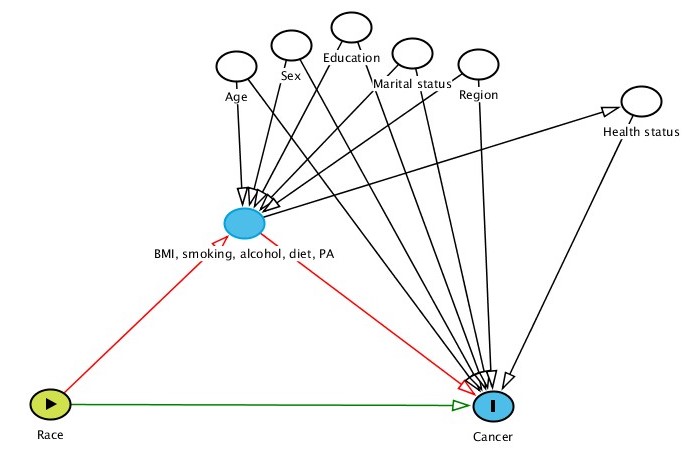
 Do you have any critiques of the paper? In general, I think it is a good paper. However, after drawing the DAG I have a concern about one of the variables they included in the analysis (so I think was considered as confounder): health status. Authors did not describe clearly what this variable refers to. For me it is not a cause of the mediators but an effect of them. Although I was not sure I should, I included health status as cause of the outcome (also for 5 seconds I thought it was an effect of outcome and then a collider, but  realized it was measured at baseline when participants were cancer-free; all participants with cancer at entry were excluded). If this is true, there is a portion of the “ indirect and total effects” that was not captured in the analysis (that additional path was blocked).


In reply to Eduardo Santiago-Rodriguez

Re: Week 7 Responses

by Erika Meza-Luman -

Socioeconomic, health, and psychosocial mediators of racial disparities in cognition in early, middle, and late adulthood

Please identify a quantitative research article evaluating mediation in your field and provide the citation. 

Zahodne, Laura B et al. “Socioeconomic, health, and psychosocial mediators of racial disparities in cognition in early, middle, and late adulthood.” Psychology and aging vol. 32,2 (2017): 118-130. doi:10.1037/pag0000154

What is the primary discipline of the authors?

Psychology, Cognitive Neuroscience, Epidemiology 

What is the exposure of interest?

Race (binary variable: non-Hispanic Black and non-Hispanic White)

What is the outcome of interest?

Episodic memory score and

Executive function composite score

What is the hypothesized mediator of interest and how is it measured?

Socioeconomic, health and psychosocial factors were simultaneous mediators:

Socioeconomic mediators: Education and income

Self-reported education was quantified as a 12-category variable ranging from “no school/some grade school” to “PhD or other professional degree.”

Annual household income in the last calendar year from all sources including wages, pensions, social security and government assistance was reported and separated into quintiles ranging from “0 = less than equal to $20,000” to “5 = greater than $102,500”

Health mediators: BMI and self-reported number of chronic conditions (out of 12)

BMI was calculated using body weight and height.

Participants self-reported if they had any of 12 listed chronic conditions: asthma/bronchitis/emphysema, joint/bone diseases, thyroid disease, urinary/bladder problem, AIDS/HIV, lupus/autoimmune disorder, high blood pressure/hypertension, diabetes/high blood sugar, neurological disorder, stroke, ulcer, hernia.

Psychosocial mediators: Perceived discrimination and external locus of control

Perceived discrimination - calculated as a sum of 9 likert-scale items in the Everyday Discrimination scale – scores ranging from 9 to 36 with higher scores representing greater perceived discrimination.

External locus control - quantified using the Perceived Constraints subscale of the Perceived Control scale which is the mean of 9 likert-scale items – scores ranging from 1 to 7 with higher scores representing more external locus of control.

Describe the modeling approach and briefly report the estimated total, direct, and indirect effects (if these are reported). 

Moderated mediation analyses were conducted separately for episodic memory and executive functioning using structural equation models.

Initial models allowed the exogenous, 3-category variable of age group (young adulthood, midlife, late life) to moderate the indirect path via interactions with the exposure and all mediators as well as the direct path via interactions with the exposure. Final models eliminated non-significant interactions.


Episodic Memory                     Executive

Functioning


                      Estimate (SE)


p

Estimate (SE)       p


Total effect of race

−0.523 (0.047)

<0.001

−1.001 (0.044)

<0.001


DE of race

−0.338 (0.046)

<0.001

−0.697 (0.041)

<0.001


Total IE of race

−0.185 (0.024)

<0.001

−0.305 (0.026)

<0.001


Specific IE of race


Education

−0.091 (0.010)

<0.001

−0.159 (0.013)

<0.001


Income

−0.060 (0.022)

0.008

−0.098 (0.021)

<0.001


Chronic conditions

−0.008 (0.006)

0.168

−0.028 (0.006)

<0.001


Body mass index

−0.002 (0.009)

0.775

0.008 (0.008)

0.303


Daily discrimination

0.000 (0.001)

0.833

−0.001 (0.003)

0.824


External locus of control

−0.024 (0.006)

<0.001

−0.027 (0.006)

<0.001


If the direct effect is reported, would you describe this as a natural direct effect, a controlled direct effect, or something else?

I would describe it as a controlled direct effect because they have calculated this controlling for the potential mediators. Also, would something else here be referring to the total effect?

Do you think there is potential measurement error in the mediator and how would that affect the results?

Given that the mediator data is self-reported, there is potential measurement error. For instance, respondents are likely to have underreported weight resulting in lower BMI calculations. Respondents are also likely to have underreported hypertension and diabetes status since medical records nor biomarkers were collected to confirm any reported chronic conditions. This would likely attenuate the results.

Do you think there are unmeasured confounders of the mediator-outcome association and how would that affect the results of the mediation analysis?

I think that there could be some potential resilience factors (i.e. religiosity) that may influence psychosocial factors and cognitive level. This would probably weaken the association between the psychosocial mediators (Discrimination and External locus of control) and the outcome and bias results towards the null.

Do you have any critiques of the paper? 

The study is cross-sectional study which raises concerns because it does not establish temporality between the potential mediators and the outcome. The study sample was also not representative of the US population – and includes far fewer African-Americans (n=796) than whites (n=4,405) which could indicate low statistical power.


In reply to Erika Meza-Luman

Re: Week 7 Responses

by Kirsty Bobrow -

Pulmonary function and cognitive decline later in life- what role does environmental exposure play

Please identify a quantitative research article evaluating mediation in your field and provide the citation.

1.         Hüls A, Vierkötter A, Sugiri D, Abramson MJ, Ranft U, Krämer U, et al. The role of air pollution and lung function in cognitive impairment. Eur Respir J. 2018 Feb 1;51(2):1701963.

What is the primary discipline of the authors?

Environmental epidemiology

Draw a DAG representing the implicit or explicit causal model explored in this paper (you do not need to post your DAG, but we will try to discuss in class).


What is the exposure of interest?

Air pollution

What is the outcome of interest?

Cognitive impairment (as captured by visual construction performance or copying geometric figures)

What is the hypothesized mediator of interest and how is it measured?

Lung function measured by spirometry

Describe the modeling approach and briefly report the estimated total, direct, and indirect effects (if these are reported). 

Causal mediation analysis using counterfactual framework and including a potential exposure-mediator interaction.


If the direct effect is reported, would you describe this as a natural direct effect, a controlled direct effect, or something else?

I think natural direct but I’m not entire sure from the description in the text.

Do you think there is potential measurement error in the mediator and how would that affect the results?

Mediator was measured lung function, possible there may be measurement error as the process of obtaining lung function is quite technical (number of trials, amount of effect, etc.) and they applied a correction factor. In general if there was measurement error in the mediator it would tend to decrease the association between the mediator and the outcome and the direct effect would be biased away from the null while the indirect effect would be biased towards the null.


Do you think there are unmeasured confounders of the mediator-outcome association and how would that affect the results of the mediation analysis?

In the analyses the authors adjusted for age, height, body mass index (BMI), socioeconomic status, current and former smoking, exposure to second hand smoke (SHS), living in an urban vs. rural area, APOE ε4, physical activity and depression. A potential unmeasured cofounder would be occupation – total effects results would be unaffected but indirect and direct effects wouldn’t be correctly estimated.

Do you have any critiques of the paper? 

The time-lag between the exposure and mediating and outcome is a conceptually hard problem. Air quality is an ongoing exposure and it is not clear whether it has a cumulative or threshold effect on either lung function or cognitive function. It is not clear when to start air-quality measurements (is it sufficient to measure over a short time period in mid-life, or only in later life, or from birth?) In addition it is hard to unpack the level of direct exposure from ambient air quality measures (there are better measurement methods but they are not generally feasible for large population studies e.g. air quality measurement device worn around neck.) The outcome measure was also an interesting choice.


In reply to Eduardo Santiago-Rodriguez

Re: Week 7 Responses

by Alice Guan -

Really interesting study, Eduardo! I just had a substantive comment/question, potentially related to the confounders -- it looks like the authors only accounted for individual level factors. I think a lot of racial disparities in cancer are contextual -- do you have any ideas RE: how you would build on their research (i.e. examining potential structural mediators)?

In reply to Jean Digitale

Re: Week 7 Responses

by Maria Glymour -

Thanks Jean.  Seems like an excellent paper. 


In reply to Maria Glymour

Re: Week 7 Responses

by Marta San Luciano Palenzuela -

Please identify a quantitative research article evaluating mediation in your field and provide the citation.

Shih et al. “Physical activity mediates the association between striatal dopamine transporter availability and cognition in Parkinson’s disease”. Parkinsonism and related disorders 2019

What is the primary discipline of the authors?

Biomedical research imaging, radiology and neurology

Draw a DAG representing the implicit or explicit causal model explored in this paper (you do not need to post your DAG, but we will try to discuss in class).

In the paper, the authors claim that the causal structure is:

Striatal DAT binding (imaging measure of dopamine levels in brain) à exercise à global cognition

In my opinion, the causal structure is however, mistaken. It would have been more plausible to have the following DAG:

Exercise à striatal DAT binding à global cognition (and also a direct arrow from exercise to global cognition)

What is the exposure of interest?

Striatal dopamine transporter levels (striatal biding ratio, measured from a SPECT scan) at the participants 10th visit (from the PPMI longitudinal cohort)

What is the outcome of interest?

Global cognition as measured by the Montreal Cognitive Assessment (MoCA) at the 12th visit

What is the hypothesized mediator of interest and how is it measured?

Physical activity measured by the Physical Activity Scale for the Elderly (PASE) at the 12th visit, a validated 12-item self-administered scale designed to measure the amount of physical activity undertaken by individuals over the age of 65. The PASE assesses the types of activities typically chosen by older adults (walking, recreational activities, exercise, housework, yard work, and caring for others and uses frequency, duration, and intensity level of activity over the previous week to assign a score, ranging from 0 to 793, with higher scores indicating greater physical activity.

Describe the modeling approach and briefly report the estimated total, direct, and indirect effects (if these are reported). 

The used correlation coefficients to evaluate the linear relationship between the variables of interest and potential confounding variables (age, disease severity and disease duration). Then, ordinary least squares (OLS) regression was used to test the proposed mediation models. In order to test the statistical significance of the total, direct, and indirect (i.e., mediation) effects, 95% confidence intervals (CI) were established by using a bootstrapping approach with 10,000 samples. Effects were considered statistically significant if the value ‘0’ fell outside the 95% CI.

 It appears (although not specifically stated) that the authors used the product method, first fitting a linear regression model with the mediator to evaluate the direct effect, and then a linear regression for the mediator on the exposure, to calculate then the indirect effect.

 The models were not controlled for any confounders, but the authors reported that the estimates did not change when age was added to the model. Disease severity was not added to any of the models but they reported a “moderated mediation model” to see if disease severity moderated the relationship between the variables in each of the paths.

 If the direct effect is reported, would you describe this as a natural direct effect, a controlled direct effect, or something else?

Probably a controlled direct effect, since it was calculated from the model that had the mediator.

However, since I believe that the causal structure is wrongly stated, I would not call this a direct effect. I am also not sure that potential confounders to the exposure-outcome, exposure-mediator and mediator-outcome have been properly accounted for…

Do you think there is potential measurement error in the mediator and how would that affect the results?

The mediator is exercise measured by the PASE. It is a well validated scale, but since it is self-administered, there may be some measurement error, which could be even differential (cognitively impaired individuals may not accurately report their exercise in the past week). If non-differential, the direction is difficult to predict.

Do you think there are unmeasured confounders of the mediator-outcome association and how would that affect the results of the mediation analysis?

Yes, I believe that there may be unmeasured confounding of common factors of exercise and global cognition, including gender and education, which were not accounted for in their models. The unmeasured confounding could have accounted for some of the association between exercise and global cognition, attenuating the indirect effect.

Do you have any critiques of the paper?

Yes. I believe the authors did not adequately justified their causal structure (how is striatal dopamine going to affect exercise levels? In the introduction, the authors in fact state the opposite, that exercise can affect striatal dopamine).

Given that they are using data from the PPMI study (an observational cohort with repeated measures), they could have used a different approach rather the convenience cross-sectional sample at the 10 and 12th visits. The PPMI cohort has information on potential confounders including gender, education, presence of other medical illnesses (that could confound the relation exercise àglobal cognition), but those were not accounted for.


In reply to Jean Digitale

Re: Week 7 Responses

by Shelley DeVost -

Armstrong NM, Carlson MC, Schrack J, et al. Late-life Depressive Symptoms as Partial Mediators in the Associations between Subclinical Cardiovascular Disease with Onset of Mild Cognitive Impairment and Dementia. Am J Geriatr Psychiatry. 2018; 26(5): 559–568. (doi:10.1016/j.jagp.2017.11.004.)

What is the primary discipline of the authors?  Epidemiology, Mental Health, Biostatistics, Geriatric Medicine and Gerontology

Draw a DAG representing the implicit or explicit causal model explored in this paper (you do not need to post your DAG, but we will try to discuss in class).

            Subclinical CVD   ->   Mild Cognitive Impairment/Dementia

                        v                                       ^

                  Late-life Depressive Symptoms

Study sample:  3,602 participants enrolled in the Cardiovascular Health Study (CHS) Cognition Study in 1992-1993, followed until onset of mild cognitive impairment/dementia or administrative censoring in 1999-2000.

What is the exposure of interest?  Subclinical cardiovascular disease

What is the outcome of interest?  Mild cognitive impairment and dementia

What is the hypothesized mediator of interest and how is it measured?  Late-life depressive symptoms, defined as two consecutive annual scores of 8 points or higher on the 10-item Center for Epidemiologic Studies-Depression Scale (mCES-D), measured 2-3 years after baseline.

Describe the modeling approach and briefly report the estimated total, direct, and indirect effects: 

1.     Causal mediation analysis performed using approach from Lange, Hansen, and VanderWeele:

a.     Estimated direct and indirect effects by modeling weighted accelerated failure time model (AFTM) with a Weibull distribution, using a duplicated dataset with two replications of the values of the exposure.

b.     Used AFTM with Weibull distribution as alternative to Cox proportional hazards model (since the proportional hazards assumption was not met) to determine the association between baseline subclinical CVD and time to onset of mild cognitive impairment/dementia. AFTM reports time ratios (TRs). TRs less than 1 mean that the exposed had a faster time to onset of the outcome, and TRs greater than 1 mean that the exposed had a slower time to onset of the outcome.

c.     Weighted causal mediation:

                                               i.     the data were duplicated once with the observed value of baseline subclinical CVD, and once with the counterfactual value of baseline subclinical CVD

                                             ii.     proportions for weights estimated from a logistic regression model of late-life depressive symptoms on baseline subclinical CVD, adjusted for baseline covariates

                                           iii.     standard errors and 95% confidence intervals were generated by 5,000 bootstrap simulations

d.     Secondary analysis: any CVD at baseline as the exposure instead of just subclinical CVD at baseline

2.     Estimated effects:

a.     TR=0.88, 95% CI: (0.83, 0.93)

Total effect for assoc between subclinical CVD and MCI/dementia onset

b.     TR=0.95, 95% CI: (0.92, 0.98)

Direct effect of subclinical CVD

c.     TR=0.92, 95% CI: (0.88, 0.97)

Indirect effect of late-life depressive symptoms

d.     64.5% mediated through late-life depressive symptoms on the log TR scale

e.     Similar results observed for secondary analysis on any baseline CVD        


If the direct effect is reported, would you describe this as a natural direct effect, a controlled direct effect, or something else?  I would describe this as a natural direct effect, since it compares the difference in counterfactual outcome (MCI/dementia) for those with and without baseline subclinical CVD and in both circumstances also set late-life depressive symptoms to what it would be for those without baseline subclinical CVD.

Do you think there is potential measurement error in the mediator and how would that affect the results?  Despite how carefully late-life depressive symptoms is defined, the potential for measurement error of this mediator will nearly always be present. This weakens the resulting inferences for the estimated effects, but I’m not sure by how much.

Do you think there are unmeasured confounders of the mediator-outcome association and how would that affect the results of the mediation analysis?  Given the complexity of vascular and neurodegenerative pathways, it is very likely that there are unmeasured confounders of the association between late-life depression and mild cognitive impairment and dementia, but again, I am not sure by how much this would weaken the inferences of this study.


In reply to Jean Digitale

Re: Week 7 Responses

by Dan Kelly -

Article: Longitudinal association between internalized HIV stigma and antiretroviral therapy adherence for women living with HIV: the mediating role of depression

https://www.ncbi.nlm.nih.gov/pubmed/?term=30702521

What is the primary discipline of the authors?

Social epidemiology of HIV

Draw a DAG representing the implicit or explicit causal model explored in this paper (you do not need to post your DAG, but we will try to discuss in class).

What is the exposure of interest?

Internalized HIV-related stigma was the exposure of interest and analyzed as a continuous variable.

What is the outcome of interest?

Adherence to antiretroviral therapy was the outcome of interest and analyzed as a binary variable.

What is the hypothesized mediator of interest and how is it measured?

Depression symptoms was the hypothesized mediator of interest. It was measured using the 20-item Center for Epidemiological Studies Depression (CES-D) Scale. 

Describe the modeling approach and briefly report the estimated total, direct, and indirect effects (if these are reported). 

The modeling approach to the mediation analysis is poorly described. The authors stated, ‘mediating analysis using bootstrapping was conducted to test whether the association between internalized stigma at visit 1 and ART adherence at visit 3 is mediated by depression symptoms at visit 2. This analysis controlled for depression symptoms and ART adherence at visit 1 (as well as the covariates). A significant indirect effect indicates mediation.’ The authors mentioned that they used the program PROCESS macro of SPSS to conduct the mediation analysis. It appears that the authors used a logistic regression analysis to estimate the total effect while the PROCESS program was used to estimate the indirect and direct effects. 

The total effect of internalized HIV stigma at visit 1 on adherence to antiretroviral therapy at visit 3 had an adjusted odds ratio of 0.64 (95% CI: 0.47, 0.87; p=0.005). 

The direct effect of internalized HIV stigma at visit 1 on adherence to antiretroviral therapy at visit 3 had an adjusted coefficient of -0.38 (SE -0.34; p<0.05). 

The indirect effect of internalized HIV stigma at visit 1 on adherence to antiretroviral therapy at visit 3 through depression symptoms at visit 2 had an adjusted coefficient of -0.05 (SE 0.03; p<0.05).

If the direct effect is reported, would you describe this as a natural direct effect, a controlled direct effect, or something else?

I think the reported direct effect is a natural direct effect because the authors do not present the direct effect at various levels of the mediator depression. I attempted to review the documentation about PROCESS and it appears that the software can estimate average causal mediation effects as well as average direct effects; I interpret average direct effects to be similar to natural direct effects. 

Do you think there is potential measurement error in the mediator and how would that affect the results?

It appears that the authors’ selection of a 20-item scale (instead of binary variable, for example) of the mediator is a strength of the tool that limits potential measurement error. However, this is one of many tools to assess depression, and the authors barely describe the measurement tool besides stating that it predicts ART adherence. The greater the potential measurement error in the mediator, the more likely it will attenuate results.  

Do you think there are unmeasured confounders of the mediator-outcome association and how would that affect the results of the mediation analysis?

Yes, I think there are some unmeasured confounders of the mediator-outcome association. The authors note that ‘ART adherence and other health behaviors are likely to be influenced by other psychosoclal factors.’ A possible unmeasured confounder could be intimate partner violence, for example, and I think this could be a cause of depression and poor ART adherence. The effect of unmeasured confounders such as intimate partner violence on the mediation analysis would be positive confounding, or bias away from null.  

Do you have any critiques of the paper? 

Primary critique is that the paper is not detailed enough to truly understand the nuances of the mediation analysis and it doesn’t use language consistent with modern epidemiology or causal inference.


In reply to Jean Digitale

Re: Week 7 Responses

by Crystal Langlais -

Please identify a quantitative research article evaluating mediation in your field and provide the citation: Gillio-Tos A et al. DNA methyltransferase 3b (DNMT3b), tumor tissue DNA methylation, Gleason score, and prostate cancer mortality: Investigating causal relationships. Cancer Causes Control (2012) 23:1549-1555.

What is the primary discipline of the authors?

Cancer Epidemiology

Public Health Researcher

Pathology

What is the exposure of interest?

DNA methyltransferase 3b (DNMT3b).

What is the outcome of interest?

Prostate cancer specific mortality (PCSM)

What is the hypothesized mediator of interest and how is it measured?

Tumor aggressiveness, operationalized as Gleason grade

Describe the modeling approach and briefly report the estimated total, direct, and indirect effects (if these are reported). 

They estimated the association between DNMT3b and the mediator using logistic regression to estimate the OR of a dichotomized Gleason grade (<8, ≥8). Cox PH models were used to estimate the effect of DNMT3b on PCSM, using age as the time scale.

They ran the Cox PH model with and without adjustment for the mediator (Barron & Kenny approach). They explicitly stated the assumptions:

(1) no residual confounding between the mediator and the outcome,

(2) no residual confounding between the exposure and the mediator, and

(3) no interactions between the exposure and the mediator as well as between the mediator and variables affected by the exposure


Total effect: 0.81 (95%CI: 0.61-1.09)

Direct effect: 0.93 (95% CI: 0.69, 1.26)

Indirect effect: not reported (see comment below in ‘critiques’)

If the direct effect is reported, would you describe this as a natural direct effect, a controlled direct effect, or something else?

They report the direct effect as the estimate obtained when including mediator in the model (Barron & Kenny method).  The interpretation of these results would be “while holding Gleason Grade constant”. Therefore, it seems this would be the CDE.

Do you think there is potential measurement error in the mediator and how would that affect the results?

Honestly, their measure of Gleason grade was quite good.  They actually pulled old tissue slides and used a pathologist to confirm the grade. There were 20 slides they were unable to locate and thus took the Gleason grade as reported on the original pathology report. They then took this well-measured variable and dichotomized. If this were a confounder, this dichotomization would raise concerns about residual confounding.  Should this also raise concerns regarding measurement error?

Do you think there are unmeasured confounders of the mediator-outcome association and how would that affect the results of the mediation analysis?

The authors actually comment on this being a strong assumption that may have been partially violated, suggesting there are plausible confounders.  They mention “non-epigenetic molecular signatures”, though I’m not sure of what effect they are proposed to have on either the mediator or outcome.  Interestingly, they say they “had to make the assumption for a correct interpretation of the direct …effect”. In truth, knowingly violating an assumption is a bad idea as we would biased results.

Do you have any critiques of the paper? 

Although I felt the measure for Gleason grade (mediator) was quite strong, they could have gone a step farther and reported on frequency of disagree between the original pathology report and the new read – this would have told us if we should be concerned.

I would have liked further discussion on the proposed confounder of the mediator-outcome relationship.  A discussion regarding the expected direction of these relationships and whether the effect of this confounder could explain away the estimated effect would have been great.

The authors mention that while you can use Barron-Kenny to get estimates of the total and direct effect, you cannot decompose to get the indirect effect. This seems counterintuitive at first.  I looked around the literature and see papers discussing getting the indirect effect in the survival context. It would have been more complete to see this reported in the paper (even if not of primary interest) however, the papers I have found appear to be more recent than when this paper was publish. Thus, perhaps no such approach existed in 2012.