Friday, January 13, 2017; 1:30 PM - 3:00 PM
Section outline
-
Lecture: Introduction: Causal theories and interrelationships between measures of disease occurrence
Theories of causal inference
Causal models and heuristics
Counterfactual effect measuresFaculty: Lydia B. Zablotska
Location: Mission Hall 1407-
Cole and Frangakis 2009 File
-
Fradet Dietary omega-3 and prostate cr Clin Cancer Res 2009 File
-
Intro_to_CAP dataset for STATA users File
-
Jain MMR ASD JAMA 2015 File
-
Orr ABM JECH 2016 File
-
Homework for Week #1 File
-
Week #1 Homework Submission Assignment
Submit your assignment here. Deadline is 01/20/2017 at 1PM.
-
Student oral presentations of research-in-progress:
Please let us know if you would like to make a short presentation about your research project in-progress during the week when we are covering topics of interest to you. There is no better way to learn the theoretical material than to work on an actual project. And, as a bonus, you will get feedback from the whole class and might even find a collaborator!
General guidelines:
Choose a week when we will be discussing a topic of interest to you. Let us know about it in advance. Prepare a short 5-min presentation of project in-progress during the week when we are covering topics of interest to you and formulate 2-3 questions for the class.
Best student presentation wins a prize!
Why should you consider doing this:
- You get extra points on your final grade.
- There is no better way to learn the theoretical material than to work on an actual project.
- You will get feedback from the whole class and might even find a collaborator!
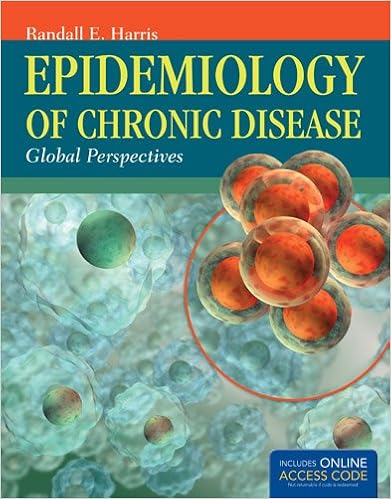
Best student presentation wins a prize! At the end of the course we will select the best presentation by popular vote. The winner will receive an excellent book by R. E. Harris, Epidemiology of Chronic Disease: Global Perspectives.